Autism Level 1: Symptoms, Diagnosis, Treatment & Support
A child may speak fluently, perform well in class and remember the smallest details about a favourite subject, yet find a simple playground conversation surprisingly difficult. They may become upset when plans change, avoid noisy gatherings or struggle to understand jokes and social cues. When these patterns occur consistently and affect everyday life, they may be associated with Level 1 Autism.
Level 1 Autism is part of autism spectrum disorder (ASD). It describes autistic children who require support, particularly with social communication, flexibility and certain repetitive or restricted patterns of behaviour. The signs can sometimes be subtle, which is why autism level 1 symptoms may become more noticeable only when social and academic expectations increase.
Recognising these differences early can help families understand what their child needs. With appropriate assessment and individualised support, children can strengthen communication, independence and everyday skills while continuing to build on their own interests and abilities.
This guide from Neuropedia explains what level 1 autism means, how its signs may appear in children and how specialists assess ASD. It also covers treatment and therapy options, practical ways parents can offer support at home, and how multidisciplinary care can address a child’s individual developmental needs.
What is Level 1 Autism?
Autism spectrum disorder is a neurodevelopmental condition associated with differences in social communication and interaction, together with restricted or repetitive patterns of behaviour, interests or activities.
Under current diagnostic criteria, autism may be described according to the amount of support a person requires. ASD Level 1 is described as “requiring support”. Levels 2 and 3 indicate progressively greater support needs.
A child with autistic spectrum Level 1 may have age-appropriate vocabulary and manage many daily activities independently. The difficulty may become clearer during conversations, friendships, transitions, group activities or situations that demand flexibility. Some children have strong, highly focused interests or sensory differences as well.
Terms such as “Asperger’s syndrome” and “high-functioning autism” were previously used for some people whose characteristics may now fall within Level 1 ASD. However, these older terms do not accurately describe every child’s abilities or support needs.
Understanding the Three Levels of ASD
| ASD level | General description | Typical support requirement |
| Level 1 ASD | Social communication differences and restricted or repetitive behaviours may interfere with everyday situations | Requires support |
| Level 2 ASD | Social communication difficulties and repetitive or inflexible behaviours are more apparent across settings | Requires substantial support |
| Level 3 ASD | Significant communication and behavioural differences may considerably affect daily functioning | Requires very substantial support |
The level is a clinical description of support needs. It should not be viewed as a measure of a child’s intelligence, personality or future potential.
| Did You Know?
According to the latest CDC ADDM Network data, about 1 in 31 (3.2%) 8-year-old children in 16 monitored US communities were identified with autism spectrum disorder in 2022. This highlights how commonly ASD is identified and why recognising developmental differences and seeking timely assessment matters. |
What are the common Autism Level 1 symptoms?
There is no single checklist that describes every autistic child. Two children with the same diagnosis can communicate, learn, play and respond to their surroundings very differently.
Some Level 1 autism symptoms commonly appear in the following areas.
1. Differences in social communication
A child may want to make friends but have difficulty understanding the unwritten rules of social interaction. You might notice that the child:
- Finds back-and-forth conversation difficult
- Talks at length about a favourite subject without noticing whether the listener is interested
- Has difficulty interpreting facial expressions, gestures or tone of voice
- Takes expressions or jokes literally
- Finds it hard to enter or maintain group conversations
- Appears unsure about how close to stand or how loudly to speak
- Prefers direct and predictable communication
Some children develop sophisticated vocabulary and speak confidently with adults, making their social communication difficulties less obvious at first.
2. Restricted interests and repetitive patterns
A strong interest can be enjoyable and may become an area of genuine knowledge or skill. In level 1 ASD, however, the intensity of an interest or repetitive behaviour may sometimes interfere with other activities.
A child might repeatedly discuss the same subject, arrange objects in a particular way, repeat certain movements or prefer doing an activity according to a fixed pattern.
3. Difficulty coping with change
An unexpected substitute teacher, a different route to school or even a change in the order of the morning routine can feel much bigger to an autistic child than adults might expect.
Children with ASD Level 1 may prefer predictability and become distressed when something happens differently from what they anticipated. Moving from one activity to another can also require additional preparation.
4. Sensory differences
Sensory processing can vary considerably. Some children are unusually sensitive to sounds, lights, smells, textures, clothing or touch. Others actively seek particular sensations or movements.
A school bell, crowded shopping centre or the texture of a particular food may therefore cause genuine discomfort or overwhelm rather than simple dislike.
5. Motor and organisational difficulties
Some children may appear clumsy or find handwriting, dressing and other coordinated tasks harder. Executive functioning differences can also affect planning, organisation, time management, task initiation and the ability to shift attention between activities.
Does Level 1 Autism have strengths too?
Yes. Autism should not be understood only through areas of difficulty.
Depending on the individual child, strengths may include excellent attention to detail, strong memory, persistence, pattern recognition, creativity or considerable knowledge about subjects that interest them.
A child who struggles to join a playground game may, for example, spend hours designing elaborate models or learning facts about planets. Another may notice patterns or details that other people miss.
These qualities vary between children, so they should not be treated as another autism checklist. A useful assessment considers both the areas in which a child needs help and the abilities that can be encouraged.
When do signs of Level 1 Autism become noticeable?
Autism begins during the developmental period, but autism Level 1 symptoms are not always obvious during the toddler years.
For some children, concerns arise early. For others, differences become more noticeable after starting nursery or school. The social environment suddenly becomes more complicated. Children are expected to negotiate friendships, understand group instructions, cope with changes and move between activities with increasing independence.
A child who communicates comfortably with parents may struggle in these less predictable situations.
Some children also learn to copy the behaviour of peers or rehearse ways of responding socially. This can make autistic traits harder to recognise and may contribute to a later diagnosis.
How is ASD Level 1 diagnosed?
There is no blood test, scan or single questionnaire that can independently diagnose autism.
A comprehensive autism assessment looks at the child’s development and behaviour across several areas. Depending on the child’s age and circumstances, assessment may involve developmental and medical history, conversations with parents or caregivers, observation of the child, communication and behavioural assessment, and information from school or nursery.
Standardised autism assessment tools may also be used when clinically appropriate.
The purpose is not simply to decide whether a child matches a list of Level 1 autism symptoms. Specialists consider how the child’s communication, behaviour and development fit together and whether another developmental, behavioural or medical condition could explain or contribute to the difficulties.
Conditions such as ADHD, language disorders, learning difficulties and anxiety may occur alongside autism or sometimes produce overlapping signs. This is one reason a specialist assessment matters.
What does Level 1 Autism treatment involve?
There is no single Level 1 autism treatment suitable for every child. Support is chosen according to the child’s needs rather than the diagnostic label alone.
For one child, social communication may be the main concern. Another may need help with sensory regulation, feeding, behaviour or daily living skills. Some children need support in several areas.
Speech and language therapy
Speech and language therapy is not limited to children who have delayed speech.
A verbally fluent autistic child may still need help with the social use of language, such as starting conversations, taking turns, interpreting meaning, staying on topic and communicating appropriately in different situations.
Occupational therapy
Occupational therapy may support sensory processing, fine motor development, self-care, participation at school and everyday independence.
Therapists can also help families understand environmental triggers and develop practical strategies for activities that the child finds difficult.
Behavioural support and ABA
Applied Behaviour Analysis (ABA) uses principles of learning and behaviour to develop useful skills and address behaviours that interfere with learning, communication or everyday participation.
Goals should be individualised to the child. Depending on need, therapy may work on communication, social participation, independence, transitions and functional behaviours.
Psychological and emotional support
Children with autism can experience frustration, anxiety or difficulty regulating strong emotions. Psychological support may be appropriate when emotional or behavioural concerns affect the child’s wellbeing, family life or school participation.
Parent guidance
Parents spend far more time with their child than any therapist does. Guidance for families can therefore make intervention more useful in everyday life.
Parents may learn how to prepare a child for transitions, communicate expectations clearly, recognise sensory overload and practise therapeutic strategies during ordinary routines.
How can parents support a child with Level 1 Autism at home?
Small adjustments can make daily life easier without making every moment feel like therapy.
Try to keep important routines predictable and tell your child in advance when something is going to change. Visual schedules can help children understand what will happen next.
Use simple, direct language when instructions are important. If your child finds social situations difficult, practise them gradually rather than expecting immediate confidence in large groups.
Pay attention to sensory triggers too. A child covering their ears at a birthday party may be overwhelmed by noise rather than behaving badly.
Most importantly, make room for the child’s interests. Favourite topics and activities can become useful ways to build communication, play, learning and connection.
Why choose Neuropedia for Autism assessment and support?
Autism can affect communication, behaviour, learning, sensory processing and emotional development at the same time. This often means that families benefit from coordinated input rather than isolated appointments with different professionals.
Neuropedia Children’s Neuroscience Center provides specialist paediatric neuroscience care for infants, children and young people across the UAE and GCC. Its multidisciplinary model brings neurological, developmental, behavioural, psychological and rehabilitative services together, with the child and family involved in decisions about care.
What families can access at Neuropedia?
- Multidisciplinary expertise: Care can involve paediatric neurologists, neurodevelopmental specialists, child psychiatry and allied health professionals according to the child’s needs.
- Behavioural therapy: Paediatric behavioural therapy, including ABA services, is available when appropriate.
- Speech and language therapy: Support can address both speech development and functional or social communication.
- Occupational therapy: Children can receive help with sensory, motor and everyday functional skills.
- Paediatric psychology: Psychological input can support emotional, behavioural and developmental concerns.
- Clinical genetics and neurodiagnostics: Access to broader specialist services can be valuable when a child’s presentation requires further investigation.
- Care under one roof: Assessment, treatment, rehabilitation and longer-term follow-up can be coordinated within the same paediatric neuroscience setting.
- Family-centred planning: Recommendations are based on the individual child’s needs rather than a standard programme applied to every autism diagnosis.
Neuropedia’s team includes professionals trained in the UK, Europe and the USA, with services designed for children from infancy through adolescence.
Early understanding can make everyday life easier
A diagnosis of Level 1 Autism does not tell you everything about a child. It provides a framework for understanding why certain situations may be difficult and what kind of support could help.
A child may need extra guidance with conversation, friendships, sensory experiences or unexpected change while showing impressive abilities in other areas. The most useful approach is therefore one that looks beyond the label and considers the whole child.
If you have noticed persistent autism Level 1 symptoms or have concerns about your child’s communication, behaviour or development, a specialist developmental assessment can provide clearer answers.
Neuropedia Children’s Neuroscience Center offers multidisciplinary assessment and support for children with autism and other developmental concerns in Dubai and Sharjah. Speak with the Neuropedia team to discuss your child’s development and identify appropriate next steps.
What is Nonverbal Autism? Symptoms, Causes & Treatment
At a glance: Nonverbal Autism
| Condition | Nonverbal or nonspeaking autism |
| What does nonverbal mean? | Using very few or no spoken words for communication |
| Can children understand language? | Yes. Many understand much more than they can express. |
| Main symptoms | Limited speech, difficulty communicating, repetitive behaviours, sensory differences and social communication challenges |
| Causes | A combination of genetic and brain development factors. There is no single known cause. |
| Can speech develop later? | Some children develop speech over time, while others communicate successfully using alternative methods. |
| Treatment | A combination of speech and language therapy, occupational therapy, behavioural therapy and early intervention, tailored to the child. |
If you have noticed that your child is not talking as expected, it is natural to have questions and concerns.
While every child develops at their own pace, delayed or absent speech can sometimes be a sign of nonverbal autism. Understanding what this means is the first step towards getting the right support.
This guide explains what nonverbal autism means, what causes it, and how it is treated, so you know what steps to take next.
What is Nonverbal Autism?
Nonverbal autism describes autistic individuals who use very little spoken language or do not speak at all. Some children may only use a few words, while others rely entirely on alternative ways to communicate.
It is important to know that nonverbal autism is not its own medical condition. It sits under the broader diagnosis of autism spectrum disorder (ASD). Many healthcare professionals now prefer the term nonspeaking autism because it more accurately describes a person’s speech without suggesting they have nothing to say.
Being nonverbal autistic does not mean a child cannot think, learn or understand. Many nonspeaking autistic children understand far more than they can express and communicate effectively in other ways.
A child with nonverbal autism may:
- Understand familiar words and simple instructions
- Recognise people, places and daily routines
- Express emotions through facial expressions, gestures or behaviour
- Learn new skills and develop over time
- Communicate wants and needs without speaking by pointing, leading an adult, using pictures, sign language or a speech-generating device
For example, a child may point to a favourite toy, bring you an object they want help with, use gestures or press buttons on a communication device instead of speaking.
Signs and symptoms of Nonverbal Autism
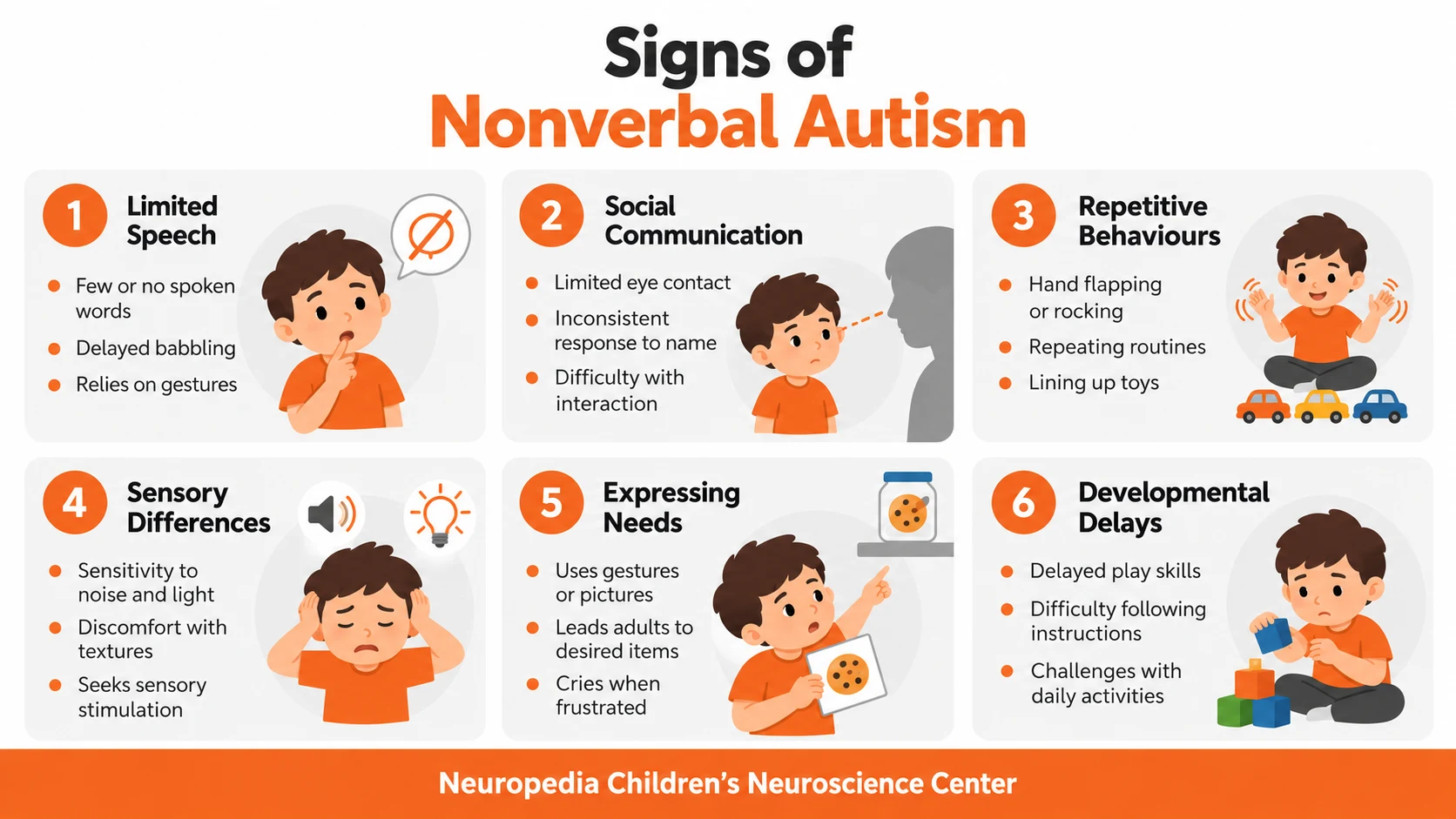
Every autistic child is different, but common signs of nonverbal autism include:
Little to no spoken languageA child may: ● Not babble as expected during infancy ● Have very few spoken words ● Stop using words they previously learned ● Rarely imitate sounds or speech ● Depend on gestures rather than words Speech development can be delayed without autism, so this sign should always be considered alongside other developmental features. |
Difficulty with social communicationChildren with nonverbal autism may: ● Respond inconsistently when their name is called ● Have limited eye contact ● Find it difficult to initiate interactions ● Show reduced use of pointing to share interest ● Struggle with turn-taking during play These behaviours are linked to differences in social communication rather than a lack of interest in other people. |
Repetitive behaviourMany autistic children display repetitive movements or behaviours, including: ● Hand flapping ● Rocking ● Spinning objects ● Repeating routines ● Lining up toys ● Becoming distressed when routines change These behaviours can help children regulate emotions or respond to sensory experiences. |
Sensory differencesSome children experience the world differently. They may be unusually sensitive to: ● Loud noises ● Bright lights ● Certain textures ● Clothing labels ● Food textures Others may actively seek sensory experiences, such as spinning, jumping or deep pressure. |
Difficulty expressing needsWithout spoken language, children may: ● Pull a parent’s hand towards an object ● Cry when frustrated ● Use gestures ● Point to pictures ● Lead caregivers to what they want Teaching alternative communication methods often reduces frustration and supports greater independence. |
Delayed developmental milestonesSome children may also experience delays in: ● Play skills ● Learning gestures ● Following instructions ● Daily living skills ● Social interaction Every child develops at their own pace, which is why a comprehensive developmental assessment is important. |
If you notice several of these signs, it is worth speaking to a paediatrician or paediatric neurologist for an assessment.
What causes Nonverbal Autism?
Nonverbal autism is thought to result from a combination of factors, including:
- Genetics: Certain gene variations are linked to autism and to differences in language development.
- Brain development: Differences in how the brain processes language and sound can affect speech.
- Co-occurring conditions: Some children with autism also have apraxia of speech, intellectual disability, or hearing difficulties, which can affect their ability to talk.
Researchers have not found one single cause, and it is not the result of anything a parent did or did not do. Ongoing research continues to look at genetic and neurological factors involved in speech development in autism.
How is Nonverbal Autism diagnosed?
There is no single test for nonverbal autism. Instead, a paediatric neurologist or developmental paediatrician will usually carry out:
- A detailed developmental history from parents or carers
- Observation of the child’s behaviour, communication, and play
- Standardised autism assessment tools
- A hearing test to rule out hearing loss as a cause of delayed speech
- Assessment by a speech and language therapist
An early, thorough diagnosis helps families understand their child’s needs and access the right support as soon as possible.
Can a nonverbal child with Autism learn to speak?
Many parents ask this, and it is a fair question. Some nonspeaking autistic children do go on to develop spoken language, particularly with early and consistent speech therapy. Others may always communicate mainly through other means, such as gestures, sign language, or communication devices.
Every child is different, so it’s not possible to predict whether a child will learn to speak. Progress may be influenced by:
- Age when intervention begins
- Individual learning profile
- Understanding of language
- Presence of other developmental conditions
- Consistency of therapy and support
The goal of treatment is not simply to encourage speech. It is to help your child communicate in the way that works best for them, whether that involves spoken language, sign language, pictures or communication technology.
Communication methods for Nonverbal Autism
Speech isn’t the only way to communicate. Many nonspeaking autistic children benefit from:
- Picture Exchange Communication System (PECS): Children learn to trade picture cards for desired items or actions, building cause-and-effect understanding.
- Speech-Generating Devices (SGDs): High-tech tablet apps that speak words or phrases aloud when a child taps icons on screen.
- Gestures and Adapted Sign Language: Teaching simplified hand signs to communicate immediate needs like “more,” “eat,” or “stop”.
These tools are not a replacement for speech therapy. They often work alongside it, giving a child a reliable way to communicate while speech skills are being developed.
Comprehensive Nonverbal Autism Treatment options
There is no single nonverbal autism treatment that works for every child. A combination of therapies, tailored to the individual, tends to bring the best results.
Speech & language therapy
Speech therapy helps children improve communication, whether through spoken language or alternative methods such as gestures, picture communication or speech-generating devices. It also supports language understanding and social interaction.
Occupational therapy
Occupational therapy focuses on daily living skills, fine motor development, play, sensory processing and independence at home and school.
Behavioural therapy
Behavioural therapy helps children build communication, social and learning skills while supporting positive behaviours and reducing challenges that affect everyday life.
Early intervention
Early intervention is one of the most important parts of nonverbal autism treatment. Starting therapy as early as possible gives children more opportunities to develop communication, social and developmental skills during the early years, when the brain is growing rapidly.
Parent training
Parents are an important part of treatment. They learn practical strategies to encourage communication, support development, and reinforce therapy techniques during everyday activities.
When should parents seek medical advice?
You should consider seeking medical advice if your child:
- Is not babbling or using gestures as expected during infancy
- Has few or no spoken words compared with developmental expectations
- Stops using words they previously had
- Rarely responds to their name
- Has difficulty making eye contact or communicating with others
- Shows repetitive behaviours alongside delayed speech
- Appears frustrated because they cannot express their needs
Trust your instincts. If something feels different about your child’s development, an assessment can bring clarity and open the door to support.
Supporting your child’s communication journey with Neuropedia
If you are concerned that your child is showing signs of nonverbal autism, seeking an assessment early can provide answers and help you access the right support. Every child communicates differently, and recognising their strengths is an important part of helping them learn, connect with others and become more independent.
At Neuropedia, we provide evidence-based assessment and support tailored to each child. Families choose us because we offer:
- Experienced paediatric neurologists with expertise in autism and child development
- Comprehensive developmental and neurological assessments
- A multidisciplinary team, including speech and language therapists, occupational therapists and psychologists
- Personalised treatment plans based on your child’s individual needs
- Family-centred care with parents actively involved throughout the treatment journey
- Ongoing follow-up to monitor progress and adjust support as your child grows
Early intervention can make a meaningful difference by helping children build communication skills, whether through speech or alternative methods.
Taking a Closer Look at Child Development Theories
Child development theories are those that focus on how a child grows and transforms over childhood. These theories are comprehensive and include a broad spectrum of markers such as emotional, social, and cognitive growth.
These theories came forth within the first half of the twentieth century, through a range of experts known as behaviorists. These skilled individuals have shaped the foundations of child psychology.
Here are some well-known theories:
Cognitive Development Milestones for 3-5-Year-Olds
During the preschool period, your child goes through several developmental milestones, including cognitive abilities. During this time, children learn about symbols and advanced play, while also focusing on single thoughts and enhancing their memory skills.
Here are the cognitive milestones that your child should meet.
Five Reasons Why You Might Miss the Symptoms of High-Functioning Autism
Autism spectrum disorder or ASD is usually diagnosed in toddlers to young children. However, in certain cases, some children might be left undiagnosed, especially if they have high-functioning autism. Sometimes, this might extend even until adulthood.
Here are reasons why such symptoms are missed out.
Importance of Physiotherapy in children
A Physiotherapist helps to restore a person’s movement or function when they are affected by injury, illness or a disability, using a holistic and patient-centred approach. Physiotherapy can be beneficial for people of all ages with a wide range of health problems, including bone and joint, brain and nervous system, heart and circulation and lungs and breathing.
A Paediatric physiotherapist is a highly specialised therapist that works with children in order to achieve their optimal physical development. They are highly knowledgeable in the assessment, diagnosis and treatment of conditions that affect babies and children through to adolescence (0-18 years). They work as a member of the wider multidisciplinary team to provide the best possible care to their patients.
Tips to Parent Your Shy Child – Behavioural Therapy
Shy children are common and natural, but it isn’t always necessary to parent them in the same way as you would an extrovert. While they might not become social butterflies, they could be intuitive and decisive in other ways. Moreover, there are certain methods you can use to help them in social settings.
Children are on a spectrum of shyness. Some children are shyer than others. In principle, being shy is perfectly normal. However, it could pose a problem if your child isn’t able to do all the activities they want to or is unhappy.
How can Occupational Therapy Help me and my Family?
Yes, it’s a word that you may have heard at the doctor’s office or a post online.
What is this about?
What does it have to do with my child?
Keeping the energy going during Ramadan: Nutritional tips for children.
It’s that time of the year where all the Muslims around the world are excited and busy with the preparation of the most blessed month ‘Ramadan’. Our children are no exception to this excitement. Although, Islam doesn’t make Ramadan fasting compulsory for children before puberty, but many children do like to fast during this month as it is a way to connect to the religion and family.
During Ramadan, fasting Muslims abstain from consuming food and drink throughout the day. They can eat and drink only during specific times of the day. This needs to be followed by fasting adults and children. Ramadan mainly comprises of 2 meals, which need to be consumed during set times of the day. It includes Suhoor, which is the first meal to be consumed before dawn, Iftar, is when fasting Muslims break their fast at sunset.
Of these meals, Suhoor is the most ignored meal by fasting children. As it is hard to convince them to wake up at 3 a.m. and eat something. To make Suhoor time easy for both parents and children I am putting down some Suhoor options which will be filling and also provide energy throughout the day. But before that I have listed some important points which needs to be kept in mind before planning the Suhoor.
How to make your child’s first Ramadan fast a positive experience
The first fasting experience for any child during Ramadan is very significant, however, it could be difficult. Fasting for so many hours in a day is a tiring prospect, especially as they need to study and learn new things at school.
As such, it’s important to make their first experience a positive one.
Here are some tips on how you can help them through the process:
Always be positive yourself and acknowledge their determination
It is important to always acknowledge the efforts of your child, no matter how small. They might have seen you fasting growing up and would be eager to do the same, however, their body needs to get used to it. Try to ease them into fasting by keeping half-day fasts at first and then full-day fasts during the weekend. Always tell them how wonderful they are doing and celebrate their achievements.
Promote Healthier Fasting
When your children fast, ensure that they have healthy meals for Iftar and Suhoor. Fresh fruits and vegetables, dairy and other nutritious foods will help them get through the day. Also, ensure that they have a lot of liquid during these times.
Let them do what they can
It would be a lot of pressure for children to fast for the whole month in one go. Let them do whatever is possible for them. Hear them out if they are tired or feeling faint.
We hope that these tips will help you and your child! For further consultation, book an appointment with Neuropedia. Call 04 343 1113.
What Lack of Sleep Does to Your Child’s Mind
Sleep is an important source of energy for both adults and children, however, a lack of sleep has major repercussions on kids.
These include general irritation, a spike in stress levels, poor memory, learning problems and lack of motivation. It could also lead to bouts of anxiety and depression.
The guidelines for sleep timings depends on your child. It is best to figure out a routine and then stick to it so that your child’s body gets used to it. In case something disrupts their routine, try to get back to a better one as soon as you can.
Facts About Down Syndrome That Parents Should Know
Down Syndrome is a chromosomal condition that occurs in one out of every 700 children. The main cause for down syndrome is the presence of an extra chromosome. Every baby is generally born with 46 chromosomes in each cell, 23 from the mother and 23 from the father. Those with Down Syndrome have an extra copy of chromosome 21, causing the symptoms of this condition.
Here are some facts that parents should know:
-Down Syndrome is the most common chromosomal condition in the world.
-Experts are still not completely aware of why babies are born with an extra chromosome 21. Some studies suggest that genetics don’t play a major role while others suggest advanced maternal age could be a factor.
-Down Syndrome is classified into three types; Trisomy 21, the most common, Transcolation Down Syndrome, affecting 3-4%, and Mosaic Down Syndrome which is rare.
-Those with Down Syndrome share common physical characteristics such as slanted eyes that are almond-shaped, decreased muscle tone, flatter face, protruding tongue and so forth.
-Symptoms of Down Syndrome greatly differ in terms of intellectual variations. Right from learning disabilities to developmental delays, the severity differs from one child to the next.
-Health issues such as congenital heart defects, vision and hearing loss, immune system problems, thyroid issues and more might affect those with Down Syndrome.
-It is possible to diagnose Down Syndrome before birth, commonly through a blood test and ultrasound. However, these tests aren’t 100% accurate.
-There is no treatment for Down Syndrome, however with therapy and assistance any child can live a better quality of life.
-Life expectancy of those with Down Syndrome has increased greatly due to the advent of medical technology and the overall improvement of quality of life.
Neuropedia Offers fantastic all-round therapy for children with Down Syndrome. We welcome you to our Children’s Neuroscience Center.
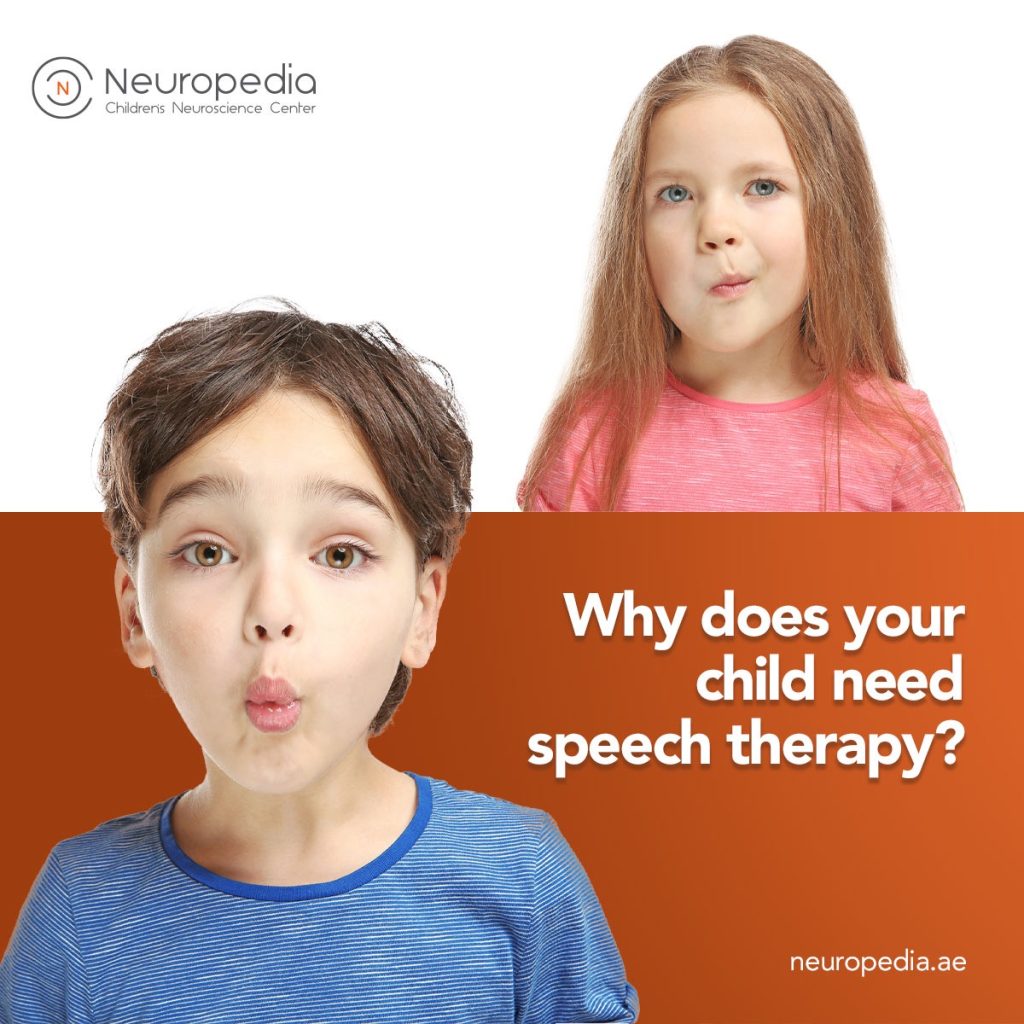
Why does your child need Speech Therapy?
Speech Therapy includes the evaluation and treatment of communication issues including speech disorders. Conducted by Speech Therapists, certain techniques help children overcome obstacles in communication.
Are weak cognitive skills preventing your child reading success?
Reading and comprehension largely rely upon the cognitive skills of a child. The weaker the cognitive abilities, the more it will prevent your child’s abilities. There is always a reason behind this.
In case your child is struggling to read or grasp basic concepts, there is a new and powerful approach to reading and comprehension. This method is used after cognitive skills testing. It is known as BrainRx Fluent, easy reading depends on strong cognitive skills. In fact, a study by the U.S.
Department of Education states that more than 80% of students who have reading difficulties also have cognitive weaknesses, especially in auditory processing.
The BrainRx program is a research-based system that first tests your child's cognitive abilities and then utilises a powerful sound-to code system to solve the problem of guesswork during reading. It challenges the symptoms of poor reading at the root.
One-on-One training with BrainRx could show improvement in as little as 24 weeks. The child’s underlying skills are first tested, and then a customization process ensures a bespoke and fun learning process, including the ability to remember what was read and absorbing new words with ease.
To find out more about BrainRx, get in touch with us.
Ketogenic Diet for Controlling Seizures in Children
While medications are predominantly used for treating epilepsy, ketogenic diet could also be prescribed by doctors as an effective way to control seizures. The diet could complement medication or could also help in cases when medication have not shown any response.
The ketogenic diet consists of a greater proportion of fat as compared to carbohydrates and proteins. To enter into a state called ketosis, the body burns fat in place of carbohydrates to produce energy, creating ketones instead of glucose.
Ketones, also known as ketone bodies, serve as fuel for the brain, keeping it energized and active. As a result, this diet has shown results in treating children with epilepsy, reducing seizures, and at times, preventing them altogether. The diet is not a replacement for medication, but can be tried alongside it.
Children Must Stay Hydrated: A Neurological Perspective
As summer sets in, the risk of dehydration among children increases. Dehydration in children can be highly debilitating; affecting their cognitive abilities, mood and overall brain function. Moreover, children are far more susceptible to dehydration than adults as they tend to sweat more and are heavily reliant on others for sources of hydration.
Role of Genetic Testing in Diagnosis and Treatment of Developmental Delay
Development delay in children can be determined through observation, family history specifications, diagnostic tests and physical examinations. In the case of disorders pertaining to undefined etiology, genetic tests offer an added diagnostic tool. They serve as the primary-line of testing for children facing development delay disorders.
A genetic test is usually recommended when there could be a family history of genetic issues or if there are specific patterns worth probing into. Tests are highly sophisticated and capable of identifying up to 98% of genetic abnormalities.
Conducting Genetic Tests for parents is generally a part of the entire process to identify whether the parent has the abnormality or not, and determine the best course of action. This also helps the expert understand if the genetic variation is the primary cause of the disorder at hand.
Dyslexia in Children: Early Signs, Symptoms, Causes, and How Treatment Helps
If your child struggles with reading fluency, frequently mixes up letters, or finds spelling unusually difficult, it may be more than just a temporary learning hurdle—it could be Dyslexia.
Dyslexia in children is one of the most common learning challenges worldwide, and catching the signs early is key to helping them succeed. With structured learning techniques, professional support, and encouragement at home, children with Dyslexia can adapt and thrive.
When identified early, Dyslexia doesn’t have to hold them back—it can be managed in ways that unlock their hidden strengths and creativity.
Neuropedia – Adaptive Pediatric Aquatic Physiotherapy
When a child encounters physical and sensory challenges, conventional therapies might not always offer the comfort and efficacy required for healing and development.
This is where Aquatic physiotherapy steps in. It leverages the soothing properties of water alongside specialized exercises to create a supportive and unique environment for physical rehabilitation.