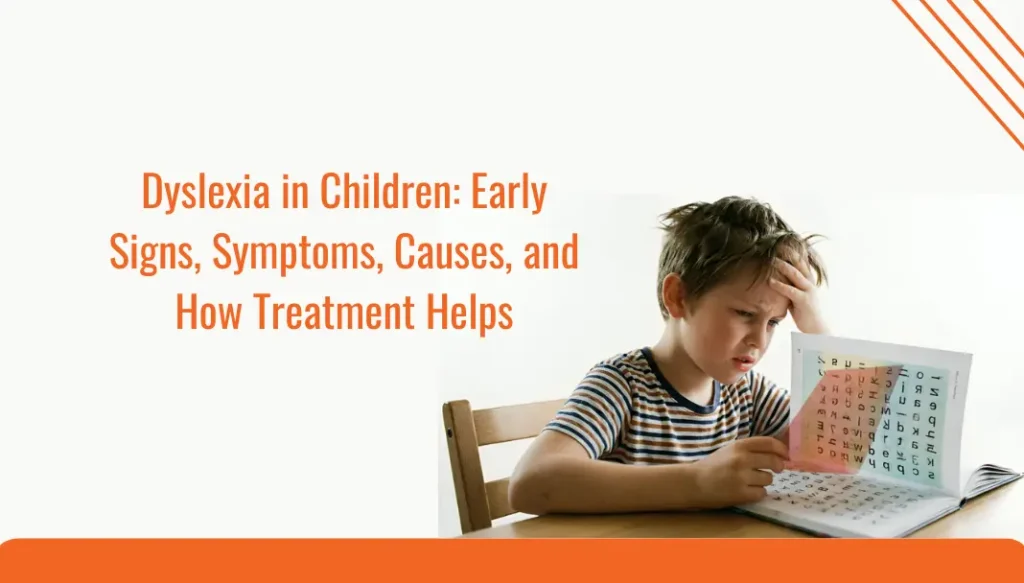
Dyslexia in Children: Early Signs, Symptoms, Causes, and How Treatment Helps
If your child struggles with reading fluency, frequently mixes up letters, or finds spelling unusually difficult, it may be more than just a temporary learning hurdle—it could be Dyslexia.
Dyslexia in children is one of the most common learning challenges worldwide, and catching the signs early is key to helping them succeed. With structured learning techniques, professional support, and encouragement at home, children with Dyslexia can adapt and thrive.
When identified early, Dyslexia doesn’t have to hold them back—it can be managed in ways that unlock their hidden strengths and creativity.
What is Dyslexia?
Dyslexia is a common condition that primarily affects reading, writing, and spelling skills. It occurs because the brain processes language in a slightly different way, making it harder to connect letters with sounds and to recognise written words quickly.
Dyslexia is not related to intelligence—many individuals with Dyslexia are highly creative and intelligent—but it can create challenges in traditional learning environments.
Dyslexia in children often shows up when they start school and begin learning to read. They may have trouble sounding out words, confuse letters, or read more slowly than their peers. With the right support, strategies, and early intervention, children with Dyslexia can strengthen their reading skills and build the confidence they need to thrive.
What Are the Different Types of Dyslexia?
Phonological Dyslexia – Difficulty matching sounds to letters and sounding out words; the most common type.
Rapid naming dyslexia – Struggles with quickly naming colours, numbers, or letters, affecting reading and processing speed.
Double deficit dyslexia – Challenges with both phonological skills and naming speed; considered the most severe form.
Surface dyslexia – Can sound out new words but struggles to recognise familiar or irregularly spelled words by sight.
Visual Dyslexia – Difficulty processing what is seen on the page, affecting spelling, letter formation, and word recognition.
Early diagnosis and therapy can significantly improve reading, learning, and overall academic success.
What Are the Causes of Dyslexia?
Dyslexia is a neurodevelopmental condition with a genetic basis, which means it can run in families. The main dyslexia causes are differences in how the brain develops and processes language, particularly in regions responsible for reading and learning.
Brain imaging studies (MRIs) show that people with Dyslexia use different areas of the brain for reading compared to those without the condition.
It’s important to remember that Dyslexia is not a sign of low intelligence or laziness. In fact, most individuals with Dyslexia are intelligent—often above average—and work especially hard to strengthen their reading skills.
What are Dyslexia Symptoms?
Dyslexia symptoms can appear early in childhood and often become more noticeable as academic demands increase.
Some symptoms of Dyslexia in children in preschool and elementary school include issues with:
Learning to pronounce lengthier syllables in a rhyming manner
Learning the alphabet, numbers, colours, shapes, and days of the week
Recognising letter names and sounds
Learning how to write and read their own name
Sounding out basic words to distinguish syllables and spoken sounds
Spelling and reading words in the correct order
As children grow older, the dyslexia symptoms may:
Face difficulties in reading and spelling
Avoid reading and writing assignments and tests by working slowly
Have trouble learning a new language
How is Dyslexia Diagnosed?
Dyslexia is most often recognised during the elementary school years, when children are expected to develop strong reading skills.
In some cases, however, it may not become apparent until later, when older children are required to read and comprehend longer, more complex texts. Even bright teenagers who continue to face challenges with spelling and advanced reading may be dealing with Dyslexia.
Only a thorough evaluation conducted by a reading specialist or psychologist, either in school or in the community, can formally diagnose Dyslexia. Paediatricians play an important role in identifying the early symptoms of Dyslexia and guiding families to the right support services.
Delaying assistance for dyslexic children can exacerbate their reading difficulties and lower self-esteem. Recognising the signs in the elementary years allows children to begin specialised reading programs promptly, giving them the best chance to thrive academically and emotionally.
How to Help Kids with Dyslexia?
While there is no single cure for Dyslexia, early intervention and effective strategies can make a significant difference. Dyslexia treatment focuses on improving reading, writing, and language skills while helping children build confidence.
Common approaches to dyslexia therapy include:
Guidance in decoding skills using multiple senses
Regular repetition and review of learned skills
Intervention intensity, or being taken out of class more frequently than once a week for real-time learning
Individual attention or small-group instruction
Focused practice on decoding abilities
Building sight word recognition
Teaching comprehension strategies to improve reading outcomes
Helping your child overcome Dyslexia with Expert Care
Dyslexia may feel overwhelming, but with the right support, children can overcome challenges and truly thrive in their academic and personal lives.
At Neuropedia, we offer state-of-the-art, specialised care tailored to each child’s unique learning needs. Our experienced team is dedicated to helping children with Dyslexia improve their reading and learning skills, while also fostering self-confidence that goes beyond the classroom.
With the right support, your child can unlock their full potential and embrace learning with a positive outlook.