
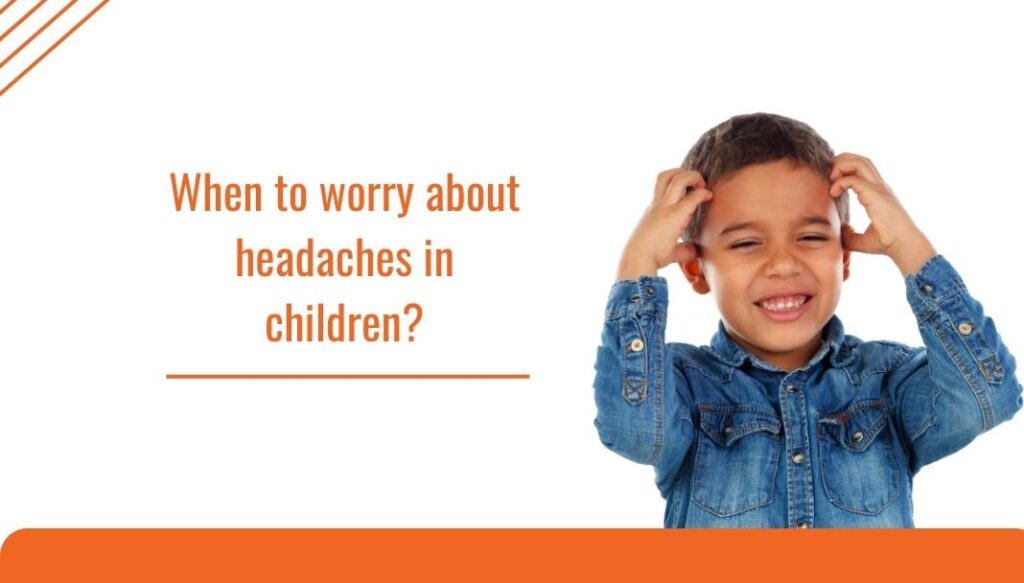
When to worry about headaches in children?
Your child is suffering from a headache. Are they ill? Are they thirsty? Is their headache caused by something more serious? Is it time to be concerned?
When children get headaches, it’s natural for them to imagine the worst-case scenario. Many parents are concerned that their child’s headache is the result of a brain tumour or another serious medical condition.
While there could be different types of headaches, the good news is that the majority of headaches experienced by children and adolescents (teens) are minor. Moreover, observations reveal that the most common cause of headaches in children is poor lifestyle choices, not something in the brain.
| Did you know?In 99% of cases, the headaches are caused by a relatively minor problem, such as a treatable infection, or by a primary headache disorder, which means there is no other underlying problem. |
However, the question is, “WHEN TO WORRY ABOUT A HEADACHE IN CHILDREN?”
As parents, what headache symptoms should you look for in your children?
Much is dependent on your child’s age and ability to communicate with you. Headaches can affect children as young as infants.
Depending on their age, they express their pain in different ways. Babies who cannot yet speak may cry, touch their heads, or close their eyes tightly to avoid painful stimuli. To express their level of pain, toddlers or elementary-age children may tell you that their head hurts, bright lights bother them or use visual imagery (i.e., feels like someone is hammering on their head). Teens may develop mood swings or withdraw.
Children who have headaches may complain of pain in the front of their heads or all over their heads. Headaches in children can occur repeatedly, be triggered by something, such as a loud noise, too much light or activity around them, or something that occurs unexpectedly.
Myths and Facts about Multilinguism
- Myth: The brain is incapable of retaining two language systems, as one would inevitably push out the other.
Fact: The brain manages languages equally and even becomes stronger and more efficient as we learn and use multiple languages on a daily basis throughout our lives.
- Myth: Speaking multiple languages may have a negative impact on the child’s academic skills.
Fact: Speaking multiple languages may have academic benefits, including enhanced cognitive skills (e.g., executive functioning and working memory) and social benefits, including enhanced relationships and participation in community activities.
- Myth: Bilinguals have equal knowledge in all their languages
Fact: It’s not unusual to hear someone being described as ‘perfectly bilingual’. But it’s an impossible standard for a bilingual person to meet, as it implies that someone sounds like two or more ‘perfect’ monolinguals in one person.
- Myth: Multilingualism causes language delay
Fact: Decades of research into bi- and multilingualism has shown that there is no causal relationship between bilingualism and language delay. Language delay has other causes, which are not linked to the fact that a child speaks more than one language.
- Myth: Bilingualism affects the speed of language development in early childhood.
Fact: Studies have shown that bilingual children reach the same language milestones at the same time as monolingual children.
- Myth: Bilingualism increases the risk of developing specific learning disabilities (known as Dyslexia).
Fact: Bilingual children with language-related problems, such as dyslexia, are not proportionally more numerous than monolingual children with the same challenges.
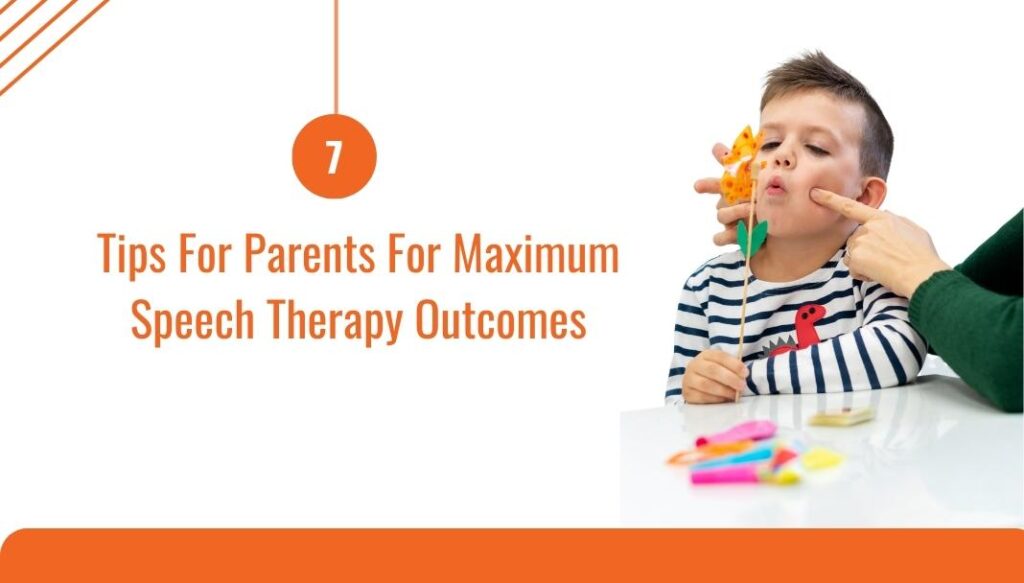
7 Tips For Parents For Maximum Speech Therapy Outcomes
If you’re reading this, you’re already on the right track. In any kind of therapy with children, parents and caregivers have an important role, not to say THE most important role, in the progress of their child.
Below, you’ll find 7 tips that are essential for any progress:
- Be involved! Parents are the key and the essence to any change. Therapists are there for guidance and adjustments. Remember, the biggest percentage of your child’s time is spent at home, with you!
- Practice, repeat! 5-10-15 minutes of exercises a day, is a huge investment in your child’s development. The brain needs practice to create new habits. It’s the only way!
- Listen to your child’s needs! They’re their best guide. If it feels right, they’ll show it. If it feels wrong, they’ll find a way to express it!
- Communicate! Interact! Give them time and priority.
- Maintain your role as a parent! Do not turn into your child’s speech therapist. Kids need their moms and dads to be a mom and dad! Let your interactions be spontaneous and fun. Not just guided and instructed.
- Ask your therapist! Do not let any idea/question/concern/worry in mind. Ask the therapist every single question you have in mind! Trust and comfort are essential in any teamwork!

Speech Therapy for Children: The Benefits
| Significant speech pronunciation delay in a 2.5-year-old toddlerA 2.5-year-old child although was communicating using sentences, his pronunciation was not very clear, and many people could not understand him. Also, he had persistent stuttering issues. For e.g., He would say, “I wwwant to play”, “I lllike this toy”, etc. Although his initial assessment revealed no other developmental issues, his speech was frequently difficult to understand.As a treatment, the child was recommended 7 sessions of speech therapy over the course of 18 months, along with some phone review sessions.These therapy sessions, combined with parental input, meant that by the age of four, this child’s speech was developing well, and no further therapy sessions were required. He successfully began Primary School with strong communication skills. |
Communication is the quintessence of human life, and being able to express is one of the most vital achievements since birth. However, there could be instances where a child struggles to reach his speech milestones and is unable to communicate efficiently.
Well, this isn’t a dead end!
A planned course of speech and language therapy and a trained speech therapist can help your child emerge from the condition.
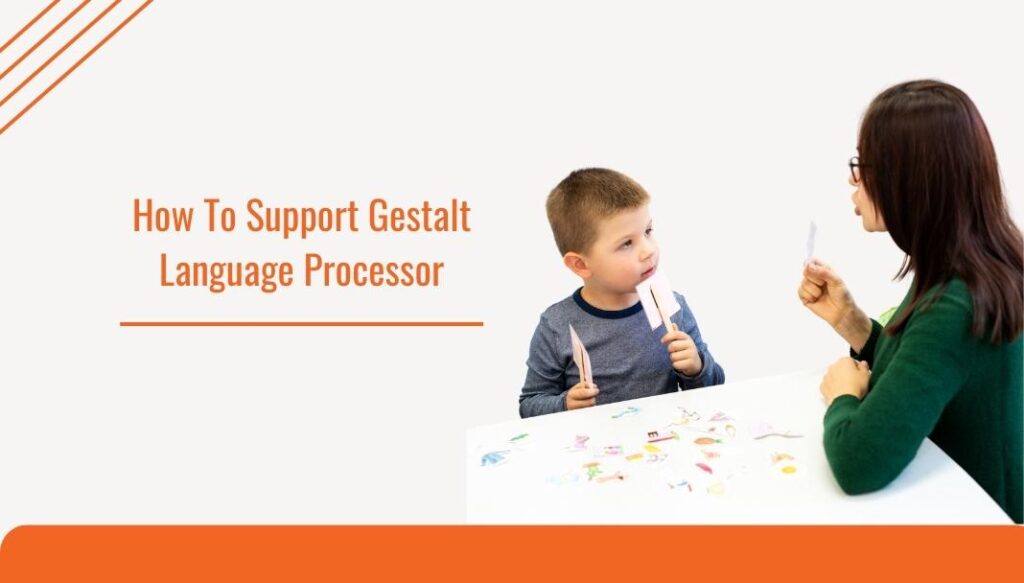
How To Support Gestalt Language Processor
There are two ways that children learn and develop language. Most typically developing children are analytic language processors. This means that they learn language in more of a typical, sequential order. For example, they learn single words first. Then, they start combine two words before moving on to short phrases and sentences. This is what we are most familiar with.
The other style of language development is gestalt language development. Children who fall into this style of language development start speaking in “chunks” of language. This often starts with echolalia (stage 1). Echolalia is when repeats what another person has said.
There are two types of echolalia:
- Immediate echolalia refers to utterances that are repeated immediately or after a brief delay.
- Delayed echolalia refers to utterances that are repeated after a significant delay (Prizant & Rydell 1984). Echolalia is prevalent among individuals with ASD who are verbal and may remain as part of their verbal behavior for some time.
In stage 2, the child mitigates by mixing and matching shorter segments from chunks. For example, if a child keeps repeating “ Let’s go play” and “ Want some water” during stage 1, in stage 2 they may break down these two chunks and say, “Let’s go some water”.
At stage 3, they would be able to single out words, understand that words can stand alone, and would try combining them with other words. Self-generated language will be developing at
stage 4, the child will be moving beyond the words they pick up from others and forming their original sentences and language.
In stage 5, the child will make sense and usage of simple grammar in communication and at
stage 6, the child will make sense and usage of complex grammar in communication.
The initial Echolalia may seem meaningless. But for Gestalt Language Processors, it is a real attempt to communicate. Our failure to acknowledge that attempt might frustrate them. This may even discourage them from attempting to communicate at all.
Tips To Support A Gestalt Language Processor:
The overall goal of speech therapy for Gestalt Language Processors is to enable them to use a self-generated language. Hence, these tips are most effective when interacting with a child in a natural and engaging context. So, use playtime or an interactive activity while applying these tips.
You can support their development of language by:
- Acknowledge your child’s scripting. Scripts are often tied with emotions.
- Respond using words or phrases to comment on the intention of the child’s speech. Further, do not focus on the literal meaning of what the child said. E.g., If a child says “wheels on the bus” every time you go outside, say “Yes, going outside”.
- Utilize pronouns while speaking. E.g., say, “I want to go play football”.
- Identify the situations and context in which they echo or use scripted phrases. In other words, if a child says “wheels on the bus” whenever he/she or anyone else prepares to go outside, it means the child is using this phrase to say “go outside”. Similarly, identify specific contexts and scripts your child is saying.
- Use core words while communicating. So, instead of saying “Ram’s new shoes are amazing”, simplify it and say “I love the shoes” or “I love it”. This is easier for your child to pick up and speak.
- Provide easy phrases and repeat them often at home during playtime. Children learn chunks of speech they hear. E.g.: Say “My toy” “Come here” “Go there” or any core words often at home.
- Treat their scripted language or echolalia as communication attempts and reinforce it.
- Use high-frequency words and phrases at home often during interaction time.
- Expand your child’s words into sentences. E.g., If they say “come come” to call someone, say “Papa come here”.
- Observe and comment on what your child says or does.
- Modeling functional gestalt instead of asking questions (which will often be repeated back to you). A good structure for modeled gestalts includes: “It’s…,” “Let’s…,” and “I’m…” statements.
- Always take conversational turns with your child.
- Tuning into/creating melody when modeling language for your child.
What not to do?
- Do not ignore their attempts to communicate.
- Avoid or reduce asking questions.
- Do not use long and complex sentences. In other words, use simple, easy functional phrases.
- Do not take their echolalia as literal meaning.
- Don’t force them to use only verbal mode to communicate. If they use gestures or AAC, acknowledge their attempts.
- Do not focus on teaching grammar or expect perfect grammar from your child.
- Do not rush them to respond to your comments.
- Avoid focusing on their faults.
Amazing BENEFITS of Applied Behaviour Analysis (ABA)
Have you heard of Applied Behaviour Analysis (ABA) therapy? ABA therapy is based upon the science of behaviour and learning. It is the gold standard for people with Autism Spectrum Disorder (ASD) as a therapeutic strategy with extensive evidence and scientific backing. ABA therapy is also beneficial for people with developmental delays and those who engage in challenging behaviours.
There are numerous benefits of ABA therapy for children and their families, including, but not limited to, improved social skills, communication skills, independent living, reduced challenging behaviours, and increased life satisfaction.
You can help your child generalise the skills they have learned from formal therapy sessions and apply them to real-life situations and experiences by observing the ABA therapy sessions. ABA therapy improves the quality of your child’s life and can improve the quality of their family’s life too.
| Interesting Find!Studies show that early detection and intensive ABA therapy for 10 to 40 hours per week can help your child make significant progress. |
ABA therapy is essentially a collection of adaptable techniques and interventions that use positive reinforcement to teach new skills and reduce challenging behaviours.
Sleepwalking and Talking: What You Need to Know
Sleepwalking also termed somnambulism, is when a child falls asleep but then wakes up and performs actions like sitting up, getting out of bed, eating, or even dressing. The child will typically forget they participated in those activities, which could take a few seconds to a half hour. It typically occurs in the first few hours of a child’s sleep.
Some of the most common sleepwalking symptoms are:
- Step out of bed and go for a walk.
- Sit up in bed.
- Not reply or talk to anyone.
- Having glassy-eyed expression.
- Being briefly confused or disoriented after being woken.
Sleep talking is when a youngster converses while they are asleep, usually without being aware of it. It might be random sounds and phrases or a normal dialogue.
By the time a child reaches adolescence, sleeptalking and talking subside naturally.
Signs of Learning Disabilities in Children- Their Causes and Treatment
Does your child understand your instructions properly and is at par in academics? Does your child understand game rules promptly? If not, then it might indicate a learning disability.
Learning disabilities are learning difficulties a child faces at mental and physiological levels. Let’s understand it more deeply.

Ketogenic Diet for Epilepsy
The ketogenic diet, also known as “keto” was devised in the 1920s, and has shown signs of working well for seizure management. It’s now largely regarded as one of America’s hottest eating fads. The ketogenic diet is commonly used to treat people with untreated epilepsy. So what is a “keto” diet? Let’s find out!
Understanding Dyslexia
Different, Not Deficient – Understanding the Dyslexia Dynamics
Dyslexia is more than just difficulty with reading—it is a unique way the brain processes language. It is a common condition that causes learning challenges in reading, writing, and spelling, despite children being intelligent and capable in many other areas. This difference in language processing can lead to frustration, self-doubt, and academic challenges if not understood and supported correctly.
Children with dyslexia often struggle because their capacity to perceive and comprehend linguistic sounds is impacted. This makes it difficult to process new words or break them into smaller sounds that can be sounded out. As a result, reading, spelling, and writing may feel slow and effortful. Some children try to compensate by memorising words, but they may struggle to recognise unfamiliar words or take time to recall known ones.
Importantly, dyslexia is not related to intelligence. It is defined as a gap between a child’s potential and their academic performance, not their ability. With the right support and coping strategies, children with dyslexia can learn to read and succeed academically, even though dyslexia itself is a lifelong condition.

What is Paediatric Physiotherapy
A very commonly asked question that a paediatric physiotherapist may get asked is “why do children need physiotherapy?”
Physiotherapy involves assessing, diagnosing and managing difficulties with movement and function. Movement is an integral part in a child’s development. Movement enables a child to explore parts of his own body as well as the environment. Children are not just mini sized adults. They move differently, develop differently and think differently. Their bones and muscles are constantly growing and changing as is their cognitive development. Children learn through play and play is their primary occupation. Therefore, the way we approach a child in physical therapy and their management differs from adults and hence it is beneficial to visit a specialised paediatric physiotherapist for mobility and development related concerns in a baby, growing child or teenager upto young adulthood. Physiotherapists practising in paediatrics have experience and sound knowledge and understanding of child development and how growing structures in their bodies can have an impact on the other systems in their bodies. The age range covered is right from birth up until 18 years of age. Paediatric Physiotherapy can be provided across various environments such as hospital neonatal ICUs and inpatient settings, outpatient and community health clinics, at schools or in their homes. Paediatric physiotherapy utilises a variety of specialised techniques to treat a wide range of musculoskeletal, neurological, cardiovascular or developmental conditions. These are based on principles of child development, motor control and functional movements where the skills that a child learns in therapy can be carried over into their daily tasks.

7 Steps of Articulation Therapy– A Guide for Parents
Articulation therapy is used for children who have difficulty producing certain sounds. This form of therapy uses exercises to help enhance the ability of the child to articulate. Speech and language therapists will work on sounds that are developmentally appropriate. Some children are not yet ready to produce certain sounds. These steps will not be of help.
Below mentioned are 7 steps utilized to improve the articulation ability of children.
Step 1: Isolate
The initial step in articulation therapy is to practice speaking the sound alone. If your kid is having trouble with a particular sound, you will demonstrate to them how to make the sound and then practice speaking it with them numerous times in a row. Once your child has finished this step, make them proceed to the next one.
Step 2: Syllables
The second phase in articulation treatment is to practice the target speech sound in syllables with a vowel sound added. Vowels would be put before and after the target sound in the middle position to rehearse it. The target sound would be practiced with various vowel combinations. You must frequently employ image resources that contain genuine words (consonant + vowel) while practicing at the syllable level.
When a youngster can reliably create the target sound in syllables, it is appropriate to go on to step 3.
Step 3: Words
At the word level, the target sound is often practiced at the beginning of words (in initial position), in the middle of words (in medial position), and at the end of words (in final position).
You must make the kid first practice the target sound in a specific word position (initial, medial or final). If the child has begun practicing the target sound at the starting position in words with around 80% accuracy, then make them practice it in the first position at phrase and sentence level before moving on to another sound position in words (medial or final positions). Before going on to the next phase, make them pronounce the target sound in all word locations.
Step 4: Phrases and Sentences
Practice at the phrase and sentence levels is the subsequent phase in articulation therapy. Essentially, a phrase is a condensed statement. Children, particularly younger ones, frequently find it simpler, to begin with, a carrier phrase, or a phrase in which only the target word changes. It can be more difficult to construct unique phrases that contain extra words that have the goal sound. The kid gets several opportunities to practice speaking their target sound in a designated location when there are two, three, or more target words (words that have the target sound).
The next stage should be reached when a youngster can speak the given words in original phrases with at least 80% accuracy.
Step 5: Stories
The target sound is then practiced in tales as the next stage in articulation therapy. There are several stories in which the target sound appears repeatedly. It is frequently a good idea to read the same tale to a kid several times until they can speak the target words with at least 80% accuracy. As part of their practice, older students will generally be able to read the narrative aloud. Younger children might benefit from hearing you read the narrative to them and emphasizing the target sounds in words. Request that the youngster recounts the story. They will very certainly need to utter some of the target words with the target sound while doing so.
The next phase is dialogue if the child can properly articulate the target sound in words while recounting a narrative and if they have mastered the sound in each sound location (initial, medial, and final) in words, sentences, and tales.
Step 6: Conversation
During the conversation phase in a speech therapy session, the therapist may conduct typical conversations with your kid. They will be watching your child’s consistency in saying words with the target sound in conversation. They may also discuss certain themes or make use of cards and visuals.
You will naturally have many talks with your youngster both at home and when out and about. Having a specific period during the discussion to focus on the right creation of the goal sound is frequently a good idea. Inform your youngster that any mistakes will be corrected at this time. In other cases, you might indirectly correct them by repeating the term with the right target sound. When doing so, emphasize the intended sound.
We would want to see some carryover into regular discourse if your kid has gone through the previous levels in articulation therapy. In other words, we’d like them to utter the target sounds in words appropriately throughout a discussion. If you continue to hear many errors, notify your child’s speech and language therapist, as they may require further sentence-level practice.
Step 7: Generalization
The final phase in the articulation therapy process is generalization. When a kid has mastered a target sound in words, phrases, sentences, tales, and conversation, it is essential to keep an eye out for carryover/generalization during various times. Inform their speech and language therapist if you see that they are not producing the target sound appropriately in a daily speech in various circumstances. They may require further practice at the conversational or sentence level.
Article Source: https://www.aptus-slt.com/post/articulation-therapy-process
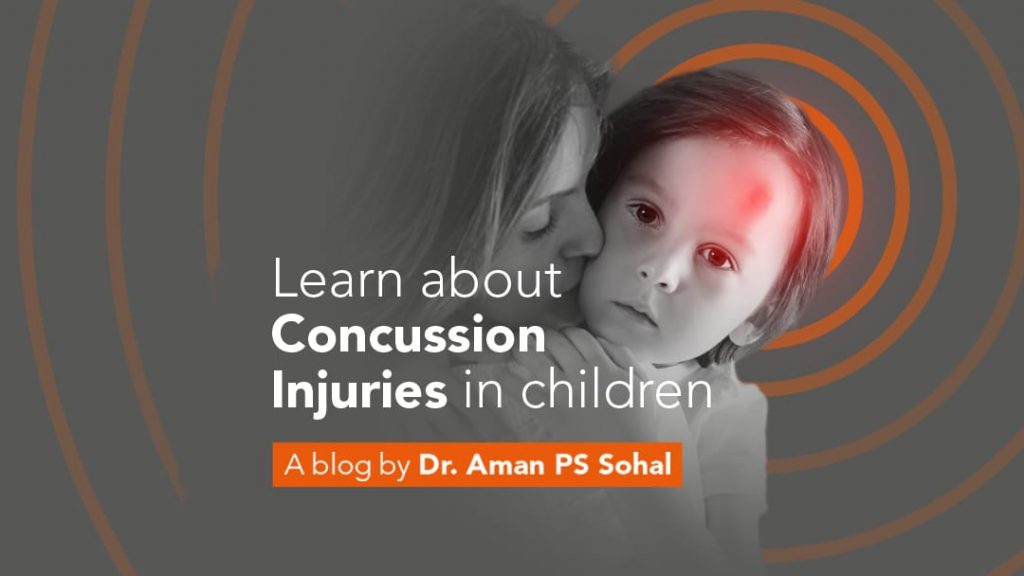
Concussion injuries in Children: A quick Fact check!
All of us have experienced some sort of “bumps” to our head at some point in our lives. Not all head bumps need medical attention; however, some head injuries can be significant enough to warrant specialist intervention. In this blog, I will focus on head injuries causing concussions in children, which is a very common presentation to my clinic.

Our Services
Pediatric Neurology
Neuropedia provides top-rated and specialized Pediatric Neurology care in Sharjah. We provide complete care for infants and children. Our Pediatric Neurologists understand that families may be searching for answers about a child’s condition or seeking the very best in treating a complex disorder. We have a team of UK Trained Consultant Pediatric Neurologists who will provide comprehensive evaluation and treatment for babies, children, and adolescents with disorders of the brain, spinal cord, muscles, and nerves.
Following are some of the disorders treated at Neuropedia:
- Epilepsy and seizures
- Autistic spectrum disorder
- ADHD
- Muscular dystrophy and other muscle diseases
- Cerebral palsy
- Spasticity management
- Neurodevelopment disorders
- Neuro-rehabilitation
- Neuropathies
- Neurogenetic disorders
- Neurometabolic disorders
- Movement disorders
- Autoimmune myasthenia gravis
- Congenital myasthenia syndromes
- Sleep disorder
- Tics and Tourette syndrome
- CVA and stroke management
- Headaches
- Neurofibromatosis and neurocutaneous syndromes
Child Neurodiagnostics
Neuropedia is the best Child NeuroDiagnostics Center in Sharjah. We are a dedicated Neurophysiology Laboratory where a team of highly qualified professionals carries out and interpret Neurophysiological tests in a child-friendly manner. Our Neurodiagnostics Center provides testing of the brain, spinal cord, nerves, and muscles.
These are the neurodiagnostic procedures we carry out in our laboratory:
- Electroencephalogram (EEG)
- Routine/standard EEG
- Prolonged/extended EEG
- Sleep EEG
- Ambulatory EEG
- Nerve conduction study
- Needle electromyography (EMG)
- Repetitive nerve stimulation Test
- Single-fiber EMG
- Evoked potentials
- Brainstem auditory evoked response (ABR)
- Visual evoked potentials (VEP)
- Somatosensory evoked response (SSEP)
Pediatric Psychology
Neuropedia has the best Child Psychologists in Sharjah. Pediatric Neuropsychological Services at Neuropedia is dedicated to serving children and young people with developmental delays and learning needs. We have a team of highly qualified, European-trained, and board-certified Child Psychiatrists working alongside Child psychologists offering comprehensive neurocognitive evaluations for children with neurodevelopmental, neurological, and conditions affecting learning and behavior. Our Pediatric Psychologists offer intervention and treatment for various conditions and help in developing comprehensive school and home-based treatment programs.
Common conditions encountered and treated at our center include:
- Pervasive development disorders, such as Autism, ASD, Asperger’s syndrome, etc
- ADHD/ADD
- Language disorders
- Learning disabilities
- Psychiatric conditions
- Tics and Tourette syndrome
- Anxiety and depression
- Behavioral disorders
- Psychosis
The assessment carried out by our team depends on the child’s presenting symptoms and the management is tailored to each child’s individual needs. The following is a list of abilities that are commonly assessed at our center:
- Full-scale IQ testing
- Conner’s questionnaire, ADOS, and ADI
- Bayley’s assessment, WIPSC, WISC, and WAIS
- Attention, Executive functions (such as planning, and organizational skills), Processing speed
- Verbal memory, Visual memory, Visual perception, Visual-motor integration (such as eye-hand coordination, and writing)
- Academic skills
- Behavioral and emotional functioning
Pediatric Physiotherapy
The Child Physiotherapy Program at Neuropedia is a unique therapy service led by European-trained therapists working in conjunction with Pediatric Neurologists to ensure that the child reaches his/her maximum potential. Our Child Physiotherapy program offers the latest evaluation and treatment techniques to improve function and quality of life for children with a variety of diagnoses and disabilities. We run weekly Multidisciplinary meetings with all therapists
Homeschooling Pros and Cons
Homeschooling is the act of educating your children at home. It is a progressive movement that is becoming more popular, especially after the advent of the pandemic. Families around the world choose to homeschool for several reasons.
Here are the pros and cons of homeschooling
Time spent with family
Pros: You can spend more time with your child and check their daily learning, feeling satisfied that you play a role in this. As such your connection with your child becomes stronger.
Cons: It might be stressful to distance your personal feelings from their schooling and you also have lesser time to yourself.
Overall costs
Pros: Even downtime can be a part of the curriculum and discounted learning packets can reduce costs.
Cons: Spending more time on homeschooling can reduce working time and income earned.
Sports
Pros: There are sports facilities around as well as community leagues.
Cons: Schools might not allow homeschoolers for sports teams and inter-school championships.
Social skills
Pros: Bullying is reduced by a lot, and children can connect with friends in the community. Also, such children have more exposure to adults and there is an acceleration of practical skill-building.
Cons: Might be tougher to makes friends in the same age group.
Flexibility and freedom
Pros: In homeschooling, the curriculum is far more flexible and can be taken at their pace. You don’t have to give your child homework and can make them do fun extracurriculars instead. Moreover, you can focus on subjects that interest your child more.
Cons: Resources found at a school would not be available. It is also not as well structured as a school.
Achievements
Pros: Children would value learning more than achievements.
Cons: Children might be motivated less.
For more advice on homeschooling, book an appointment with experts at Neuropedia. Call 04 343 1113.

7 Common Myths about Dyslexia
Dyslexia is a condition classified by learning difficulties, especially when reading, writing, or interpreting words or symbols. In general, this disorder doesn’t affect intelligence as a whole, however, children with this condition might find conventional learning methods difficult.
There are several myths surrounding Dyslexia. They are as follows:

Do you have concerns that your child is stuttering?
Stuttering is a relatively rare form of speech difficulty, affecting more school-aged boys than girls. If we listen to anyone’s speech, we notice that no one has “perfect speech”, free from disfluencies. The difference to look for is the amount of effort and tension associated with the movement of stutter/disfluencies. Fluent speech is the smooth, relatively easy, and flowing way in which a child speaks. Speech that is not fluent and is effortful is considered a stutter. Eventually, secondary or motor behaviours appear with children who do not receive the intervention. These include muscular tension, breathing abnormalities, negative emotions, and avoidant behaviours.
10 Best Indoor Activities for Kids
Play is an important part of a child’s development, but it’s not always possible to step outside. Especially in the UAE where heat is rampant. Here are 10 Best Indore activities for kids :

GET YOUR CHILD SEEN BY THE RIGHT EXPERTS. EPILEPSY CAN BE TREATED!!
Epilepsy caused due to abnormal brain activity, leads to seizures or moments of irregular behaviour, abnormal feelings and a general loss of awareness. It is classified as a neurological disorder.
Recognizing seizures, especially in children, is not easy – even more so in babies and infants as they are unable to express themselves. Seizures are different, ranging from spasms and muscle convulsions to general daydreaming or lack of focus. While brain activity might return to normal after the seizure, if left untreated, epilepsy could hamper the child’s general development and quality of life.
It is crucial to catch the early signs of epilepsy and distinguish them from normal childhood behaviour or one-time seizures.
Signs include:
-Attention blackouts for short periods, being dazed, having trouble with memory, unresponsiveness or mumbling
-Irregular clumsiness including falling or stumbling often
-Repetitive movements including nodding of the head or blinking rapidly
-Pain in the stomach leading to sleepiness or confusion. A general feeling of tiredness and feeling irritable when woken up.
-Complains about surroundings in terms of something being off
-Repetitive fear or anger outbursts
-Repeated “jackknife” movements in babies or grabbing movements with both arms when they are on their backs.
If such signs keep occurring, book an appointment with our expert neurologists at Neuropedia.

CELEBRATING THE EMIRATI FOOD CULTURE
With National Day of UAE being around the corner, let us discuss about the most discussed and debated topic ‘FOOD’. So many different diets are being discussed in the present time, but we have forgotten the importance of accepting and celebrating the traditional food items and traditional food culture. Emirati food culture is a diverse culture as many of its dishes are a mix of Indian, Arabian, Mediterranean and Turkish. Because of such diversity, Emirati cuisine is easily and widely accepted and loved among all the ex-pats of the country. Children are no exception to this, the different Emirati dishes like hummus, shawarma, arayes, fattoush, and falafel are loved by them. So today, I would like to share my thoughts, certain facts, and figures of why it is a good idea to include the different food ingredients used in Emirati cuisine in your child’s diet. Here are a few food items I am discussing – chickpeas, dates, olives, and saffron.
Chickpeas – are part of the legume family and a good source of protein and carbohydrates. Their nutty taste and grainy texture pairs well with several other foods and ingredients. The most popular dish made with chickpeas is the creamy ‘Hummus’ which is most loved by adults and children. It is also a very good source of fiber, ½ cup of cooked chickpeas has 6.2g of fiber, so this is can be a very good food option for weight watchers and for mothers who are worried about the increasing junk food consumption of their children and teenagers. Chickpeas are a good source of protein, ½ cup of cooked chickpeas has about 7.3g of protein. Therefore, it has become a much-loved option among vegetarians and vegans. It should be included in the diet of the children and teenagers to support muscle and linear growth. This humble-looking legume is also a good source of iron, ½ cup cooked chickpeas contain 2.4mg of iron. Due to its nutritional profile, it can be one of the best first foods for your child.
So here are the different ways to include chickpeas in your and your child’s diet.
*6 months and beyond – it can be given as boiled chickpeas (should be smooshable between two fingers), including in the form of hummus, chickpea pasta. Prefer a homemade hummus, use curd instead of tahini if there is a family history of food allergy.
*Hummus can be prepared in different ways – Pink Hummus (Beetroot hummus), Green Hummus (Avocado hummus), mixed hummus (use moong sprouts and chickpeas).
*Serve steamed carrot sticks, avocado slice with hummus. For toddlers, stir-fried carrot sticks can be used. Hummus can be used as a sandwich spread. Children can also have it in the salad, or crisp chickpeas (shallow fry the boiled chickpea with some spice and chickpea flour).
* You can also try including in the pasta or spaghetti, savory crepe or try making chickpea patties.
Dates – more than 40 varieties of dates are grown in the UAE. Guests and visitors are traditionally welcomed with dates and Gahwa. This tiny fruit is packed with a tremendous amount of energy and micronutrients. One medium-size date can give about 20 kcal. This makes dates a very high-calorie food ingredient, which should be a part of the growing child’s diet and also a very useful hack for mothers who are worried about the flattering weight of their children. Dates act as a natural sweetening agent in many dishes, therefore it becomes are very good choice for sweetening the porridges and shakes of the children and can be part of the first foods of the baby. Because of its sweet taste, it helps to keep away the craving for sweets and chocolates, thus it can be used by children and teenagers to reduce their sweet or sugar intake.
Date is a very versatile food ingredient and can be used in many ways such as-
*Date puree in their oats porridge or wheat porridge.
*It can be mixed with curd, make a banana date smoothie, or add it to different fruit shakes.
*Add it to the pancakes
*Serve it as a sweet dip with crackers
*There are many recipes that make use of dates to make sweet balls and laddoos
*Use as a replacement for sugar in salads, cookies, cakes, and granolas.
So yes, there are ample ways to include dates in your child’s diet, give it a try.
Olives /olive oil – olive and olive oil are some of the key ingredients in many of the Emirati dishes. Many different kinds of olives are available from around the world in UAE. One can relish them with vinegar, some spice or with garlic. Olives are very high in Vitamin E, which is a potent antioxidant, also the fatty acid composition of olive oil is 55-83% monounsaturated fatty acid (MUFA). Vitamin E boosts the immune system, therefore adding olives to your child’s diet will help in keeping the cold and cough away. The MUFA is known to reduce heart disease by replacing the saturated fatty acid(SFA) (sources of SFA- ghee, butter, cream) in the diet. Diet high in MUFA improves insulin sensitivity and reduces inflammation. Fat is an essential dietary component of a child’s diet. It plays an important role in the development of the brain and helps them to reach maximum growth potential. It is required for the body to absorb the fat-soluble vitamins, Vitamin A, D, E, and K. Olive oil is also used for gut healing which in turn helps in reducing anxiety and anxiousness, so by using in your child’s diet, it can help in reducing meltdowns and tantrums. Therefore, restricting fat in the diet of the child can have adverse consequences, one can always replace the SFA’s with MUFA, and now you all the best source for it. The ways to include olive or olive oil in diet can be as follows –
*Start with roasting or stir-frying the veggies with olive oil.
*Add olives to pasta, sandwiches, pizzas, and salads.
*Replace the butter in the cookie or cakes with olive oil.
*There are flavor-infused olive oils, which can be added to a smoothie or shake.
Saffron – it has distinct taste and flavor, the Gahwa served as welcome drink is many a times flavored with saffron. These tiny, thin thread-like food ingredient is known for its antidepressant and inflammatory properties. It also known to brighten the mood. So it’s a good idea to add it to your morning tea to keep the Monday blues away, also make it a point to include in your child’s diet to keep the terrible two’s and danger three’s tantrums at bay. It is also a good initiative to include saffron in older children’s diet, as in growing years they tend to deal with many different kinds of emotions and situations, a little boost from the carotenoid pigments in saffron might help. Saffron can be part of risottos, milk, rice-based dishes.
Along with the kind of food we eat, the meal environment also plays a very vital role in developing a good relationship with food. In the Emirati food culture, the entire family sits together to eat and they prefer eating with hands. This culture of eating together, encourages family bonding, also helps in reducing picky eating, while eating together children observe their parents, so it gives parents a good opportunity to act as role models to inculcate healthy eating habits. Eating with hands exposes children to different textures like smooth, rough, soft, grainy, crisp and crunch which helps in reducing picky eating and reduces the aversion to certain textures. Picking the food with fingers aids in developing pincer grasp and eye-hand coordination, this, in turn, helps in encouraging mindful eating and reducing pickiness.
Thus, this National Day of UAE, let us all give some love back to this beautiful country by appreciating and encouraging the Emirati Food Culture.
Credits: Ms. Nida Khan
Clinical Dietitian (Ketogenic)