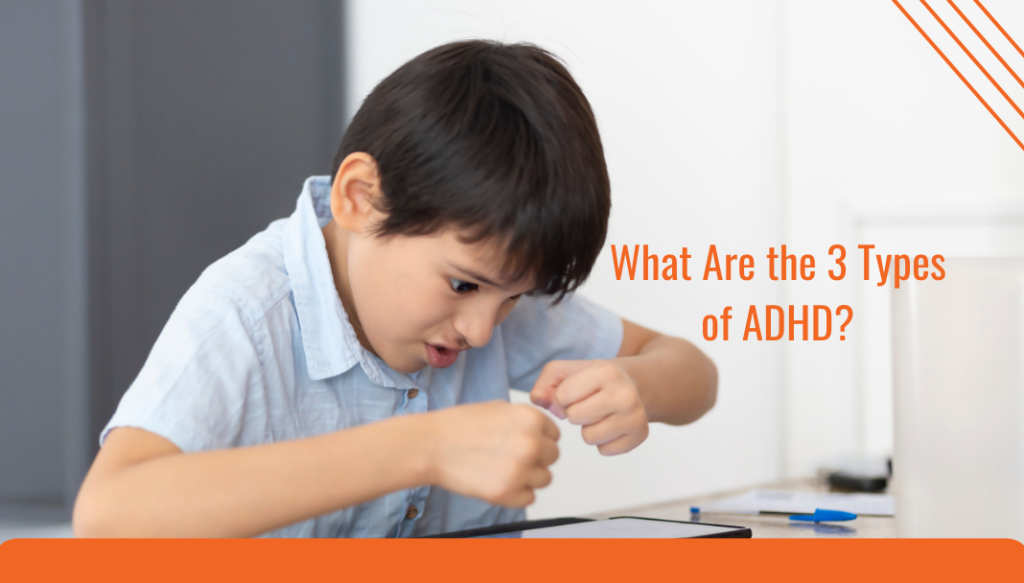
Imagine a classroom filled with young minds eager to learn. While most children sit attentively, one child always seems lost in their own world, another who can’t sit still, and yet another who blurts out answers before the question is fully asked.
These behaviors aren’t just signs and symptoms of a restless child; they may be indicators of Attention Deficit Hyperactivity Disorder (ADHD).
ADHD is a multifaceted condition that varies from child to child, so parents and caregivers need to recognize the three different types of ADHD.
What are the 3 types of ADHD?
The 3 types of attention deficit disorder (ADHD) include:
Children with this type of ADHD often blend into the background. They’re not disruptive, which can make their struggles with attention less noticeable. However, this doesn’t mean their challenges are any less significant.
Daydreamers in Class: These children might be the ones gazing out the window, missing important instructions as their minds drift. It’s not that they don’t want to pay attention — they simply struggle to stay focused on routine tasks.
Forgetfulness: They might forget to do homework, frequently misplace things, or struggle to finish tasks. This isn’t about laziness—it’s a symptom of ADHD.
Disorganization: Their space and thoughts can be a bit chaotic, making it tough to plan and complete tasks smoothly. Inattentive ADHD can easily be mistaken for laziness or a lack of motivation.
This type of ADHD is often the most noticeable. Children with predominantly hyperactive-impulsive presentations are in constant motion and tend to act before they think.
The Energizer Bunny: These kids are always on the go, unable to stay still or stop fidgeting. Their endless energy can be tiring for everyone around them.
Impulsivity: They often act on impulse, interrupting conversations, struggling to wait their turn, and making snap decisions. This can lead to social challenges and even accidents.
Lack of Patience: Waiting in line or sitting through a lesson can be tough for them. Patience isn’t their strong suit, and they find it hard to hold back their impulses.
Hyperactive-impulsive ADHD is often easier to diagnose because the behaviors are more outwardly disruptive.
3- ADHD Combined Presentation
As the name implies, the combined presentation includes both inattentive and hyperactive-impulsive symptoms. This is the most common type of ADHD and children with this presentation experience challenges in both areas.
A Complex Mix: These children might struggle with inattention one moment and bouncing off the walls the next. They may lose focus easily but act impulsively, making it challenging to stay on task and manage their behavior.
Impact on Learning and Social Skills: Combining symptoms can make school particularly challenging. These children may fall behind academically and need help making and keeping friends due to their impulsive behavior and difficulty paying attention in social settings.
Tailored Interventions Required: Because they exhibit a wide range of symptoms, children with combined ADHD often need a comprehensive approach to treatment.
Treatment Options
1- Therapy
Behavioral Therapy: The first treatment is behavioral therapy, especially for children under 6. It provides effective emotional expression strategies and replaces inappropriate behaviors.
Additional Therapies: Additional therapies such as ADHD caoaching, Cognitive Behavioral Therapy (CBT) and classroom interventions can also be beneficial.
2- Medication
Stimulants: Stimulants treatment quickly boosts brain chemicals for focus and attention. Stimulants may have side effects such as anxiety, decreased appetite or sleep issues and only effective for 70 – 80% of children.
Nonstimulants: Who experienced side effects and doesn’t respond well to stimulants are treated with Non – Stimulants.
3- For Adults
Similar treatment options apply, with close collaboration with a healthcare provider to find the most effective plan and dosages.
Finding the Right Support
Understanding which type of ADHD your child has is the first step toward helping them thrive. Each type needs a tailored treatment approach.
Whether your child is struggling with inattention, hyperactivity, or both, early intervention and the proper support can significantly affect their development and quality of life.
At Neuropedia, we specialize in diagnosing and treating ADHD in children. Our expert team provides personalized care tailored to your child’s specific needs. If you’re concerned about your child’s behavior and suspect ADHD, don’t wait—reach out to us today.