


 04 343 1113
 info@neuropedia.ae


Understanding benign rolandic epilepsy is the first step for parents in navigating a diagnosis that often sounds much more frightening than it is. While hearing the word epilepsy can be a shock, this specific condition is widely considered one of the more positive forms of childhood seizures because it is self-limiting.
It is a common syndrome, accounting for approximately 15 percent of all childhood epilepsies, and is characterised by the reassuring fact that almost all children completely outgrow it by their mid-teens.
What is Benign Rolandic Epilepsy of Childhood?
Benign rolandic epilepsy of childhood, typically begins in children between the ages of 3 and 13, with most cases starting around age 7 or 8. The name comes from the rolandic area of the brain, which controls physical movements.
Doctors may also refer to it as childhood epilepsy with centrotemporal spikes (CECTS) because of the specific patterns seen on a brain wave test. The term “benign” is used because most children develop normally and their seizures resolve on their own as the brain matures. It does not typically affect a child’s intelligence or long-term potential.
Common Benign Rolandic Epilepsy Symptoms
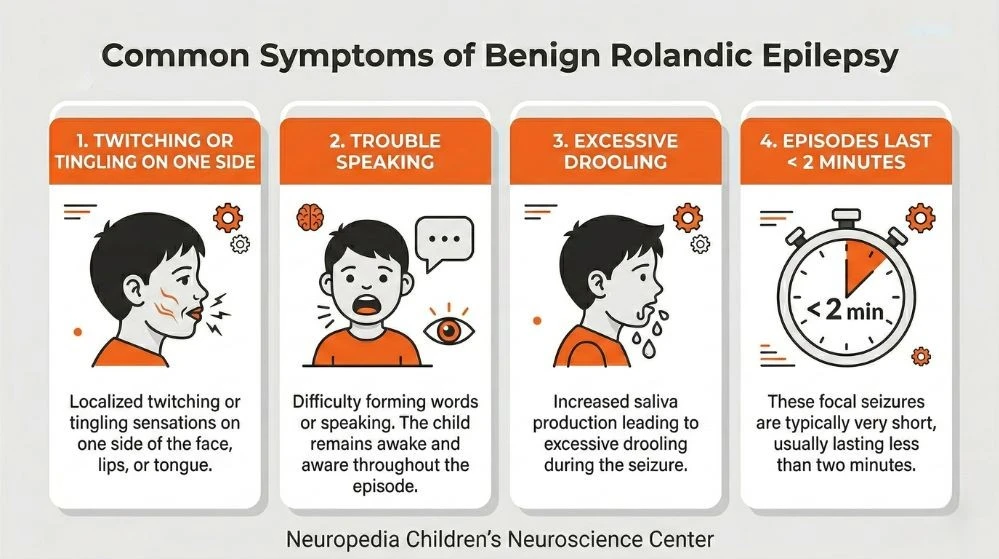
Recognising benign rolandic epilepsy symptoms can help parents stay calm during an episode. These seizures are focal, meaning they start in one specific part of the brain, which is why they often only affect the face and mouth. Common signs of a seizure include:
- Twitching, numbness, or tingling on one side of the face, tongue, or lips.
- Difficulty speaking or making sounds, although the child is usually fully awake and aware.
- Excessive drooling due to a temporary inability to swallow properly.
- Brief episodes that typically last less than two minutes.
Many of these seizures happen while the child is sleeping, often just after they fall asleep or right before they wake up in the morning. While a focal seizure can sometimes develop into a larger seizure where the whole body shakes, this is less common and usually occurs during sleep.
Exploring Benign Rolandic Epilepsy Causes
Many parents naturally wonder about Rolandic epilepsy causes. While the exact cause is currently unknown, medical research suggests a strong genetic link. It is not caused by brain tumours, injuries, or anything a parent did during pregnancy. It is common for children with this condition to have a close relative who also experienced seizures as a child.
Scientists have even identified certain gene mutations in some families that seem to be connected to this syndrome. Essentially, the brain’s “wiring” in that specific rolandic area is just a bit more sensitive during childhood.
How is a Diagnosis Made?
If your child has had a seizure, a specialist, like a paediatric neurologist, will use a few key methods to confirm the diagnosis:
- Medical history: A detailed description of the seizure, including when it happened and what the child’s movements were like.
- EEG (Electroencephalogram): This is the primary diagnostic tool. It records the brain’s electrical activity using small sensors on the scalp. In this condition, the EEG shows very specific electrical patterns called centrotemporal spikes, which often become more obvious during sleep.
- MRI scan: While not always necessary, an MRI can provide detailed images of the brain. For children with this specific type of epilepsy, the MRI is almost always normal, which helps rule out other issues.
Standard Benign Rolandic Epilepsy Treatment
Deciding on a benign rolandic epilepsy treatment plan is a collaborative process between parents and doctors. Because these seizures are often infrequent and mostly happen at night, many children do not need daily medication. Treatment might be considered if:
- Seizures happen during the day or interfere with school.
- Seizures are becoming very frequent or long.
- The child is experiencing learning or behavioural challenges during the period they have seizures.
When medication is needed, doctors typically use a low dose of common anti-seizure medicines like levetiracetam. These are generally very effective, and most children can eventually stop taking them after a few years of being seizure-free under a doctor’s guidance.
Supporting your Child at Home
While the medical outlook is excellent, having seizures can still feel stressful for a family. Parents can support their child by focusing on a few healthy habits:
- Maintain sleep hygiene: Lack of sleep is a well-known trigger for many types of seizures. Ensuring your child gets consistent, restful sleep is one of the best ways to help.
- Reassurance: Explain the situation to your child using gentle, easy-to-understand language. Offer them comfort by emphasising that they are safe and that these unusual sensations are just a temporary phase they will naturally outgrow.
- School communication: Keep your child’s teachers and school nurse informed. While most children do very well in school, some may need a little extra support with learning or focus while the condition is active.
- Safety plans: Ensure that anyone who cares for your child knows what to do if a seizure happens. Most of these seizures do not require emergency intervention, but having a plan helps everyone stay calm.
A Positive Outlook for the Future
The most important takeaway for parents is that the prognosis for this condition is very favourable. Most children will completely outgrow their seizures by the age of 15.
Once the seizures stop and the brain’s electrical patterns return to normal, any temporary learning or behavioural issues usually resolve. Your child can lead a full, active life, participate in sports, and look forward to a future where these childhood seizures are just a distant memory.
Why Choose Neuropedia for Epilepsy Care?
At Neuropedia, we understand that a seizure diagnosis affects the entire family. As a leading centre for paediatric neuroscience, we offer a specialized environment tailored specifically to children’s neurological needs.
- Expert paediatric neurologists: Our team includes top specialists who have years of experience diagnosing and treating benign rolandic epilepsy.
- Advanced diagnostics: We provide state-of-the-art EEG monitoring and mapping to accurately identify centrotemporal spikes, ensuring an exact diagnosis.
- Family-centred approach: We don’t just treat the condition; we support the child’s emotional and educational development and provide parents with the tools they need to manage it at home.
Comprehensive care: From initial consultation to long-term follow-up, Neuropedia ensures your child’s brain health is monitored through every stage of their growth.
Is your Child Experiencing Unusual Nighttime Symptoms?
If you have noticed sudden twitching, speech difficulties, or unusual episodes during your child’s sleep, expert evaluation is essential for peace of mind. At Neuropedia, our specialised paediatric neurology team provides comprehensive diagnostic testing, including advanced EEG mapping, to accurately identify and manage conditions like benign rolandic epilepsy.
We focus on a family-centred approach to ensure your child receives the most supportive care possible. Book a consultation with our paediatric neurology specialists today to ensure your child’s healthy neurological development.



.png)


