


 04 343 1113


| Key takeaways: • Intermittent Explosive Disorder (IED) is a recognised neurobehavioural condition, not a parenting failure. • IED is characterised by repeated, impulsive outbursts that are grossly disproportionate to the trigger. • There are 7 core signs that distinguish IED from typical childhood tantrums. • Causes are rooted in neurobiology, genetics, and environment, not “bad behaviour”. • Left unaddressed, Explosive Anger Disorder can affect a child’s emotional wellbeing, relationships, and school performance. • Early, specialist intervention dramatically improves long-term outcomes for children and families. • Centres such as Neuropedia provide comprehensive, multidisciplinary assessment and personalised behavioural programmes to support children and families. |
Every child has a meltdown from time to time. Tears over a spilled drink or a frustrated shout when a toy breaks; these are normal, fleeting moments in childhood. But when your child’s anger seems to erupt out of nowhere, far exceeds the situation, and leaves the whole family walking on eggshells, something deeper may be at play.
Intermittent Explosive Disorder (IED) is a neurobehavioural condition in which children have sudden, intense episodes of anger that can be difficult to manage. Unlike common tantrums that have clear triggers, these reactions can feel extreme, unexpected, and out of proportion.
Recognising the 7 signs of Intermittent Explosive Disorder is the first step towards understanding your child’s behaviour, and getting the specialised paediatric support your child needs to flourish.
What is Intermittent Explosive Disorder (IED)?
Intermittent Explosive Disorder (also referred to as Explosive Anger Disorder) is a recognised neurobehavioural condition characterised by repeated episodes of impulsive, intense anger that are out of proportion to the situation.
At its core, IED is linked to difficulties with emotional regulation and impulse control, not simply defiance or misbehaviour.
How does it manifest in children?
In children, Intermittent Explosive Disorder symptoms can appear as:
- Sudden, brief emotional outbursts
- Verbal aggression, such as shouting or threats
- Physical aggression, including hitting, throwing objects, or damaging property
- Reactions that seem to come “out of the blue,” with little obvious warning
The tension-outburst-relief cycle
A key feature of explosive disorder is a recognisable three-phase cycle. Understanding this cycle helps parents anticipate and respond rather than react.

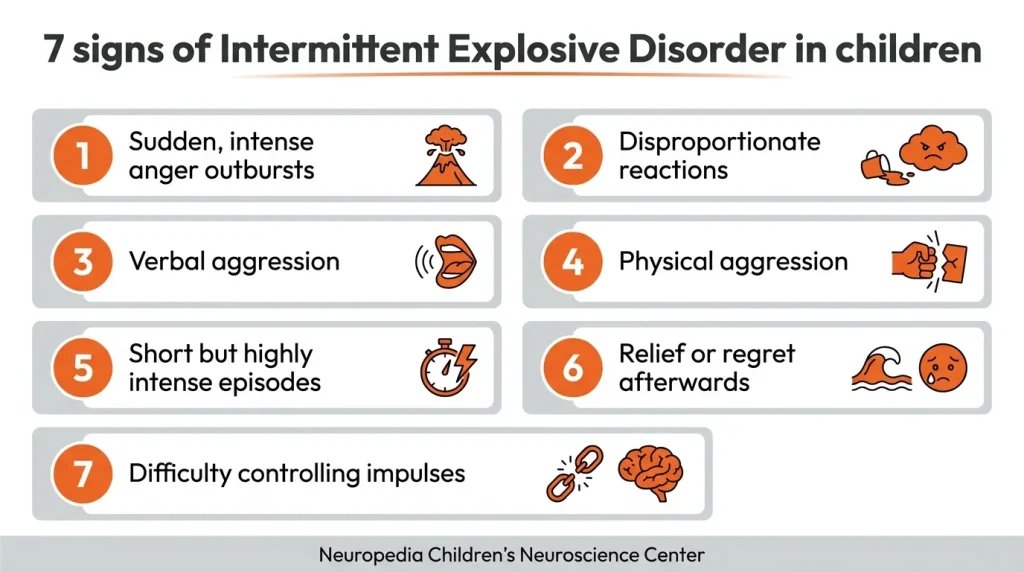
7 signs of Intermittent Explosive Disorder in children
Recognising these signs of Intermittent Explosive Disorder can help you distinguish between typical behaviour and something that may require specialised support. These signs often appear as patterns rather than isolated incidents.
1. Sudden, intense anger outbursts
Children with IED may shift from calm to very upset within seconds. These reactions often appear without clear warning, leaving parents feeling caught off guard by the speed and intensity of the change.
2. Disproportionate reactions
One of the most noticeable signs is when a child’s response far exceeds the situation. For example, if a parent asks them to switch off a device, it can lead to screaming, crying, or aggressive behaviour that feels out of proportion.
3. Verbal aggression
Outbursts may include shouting, arguing, or using unusually harsh or threatening language. This verbal intensity can escalate quickly, especially when the child feels overwhelmed or misunderstood.
4. Physical aggression
In some cases, anger is expressed physically through actions like hitting, kicking, pushing, or throwing objects. Children might also damage toys or household items during these episodes, which can raise safety concerns.
5. Short but highly intense episodes
Despite how destructive they are, IED episodes are usually brief. The child may escalate quickly and then calm down just as rapidly, which can be confusing for both the child and those around them.
6. Relief or regret afterwards
After an outburst, many children appear calmer and may even seem unaware of the intensity of their behaviour. Some express guilt or remorse, while others simply feel a sense of emotional release.
7. Difficulty controlling impulses
A common underlying issue is poor impulse control. Children may struggle to pause or think before reacting, and similar behaviours may be noticed across different environments such as home, school, or social settings.
Understanding the root: What causes Explosive Anger Disorder?
Intermittent Explosive Disorder does not stem from a single cause. Instead, it develops through a combination of biological and environmental influences:
- Neurological differences: Research suggests that children with IED may have differences in the parts of the brain responsible for emotional regulation and impulse control.
- Genetics: IED clusters in families, pointing to a heritable component. A child with a parent or sibling with Explosive Anger Disorder or related mood conditions is at higher risk.
- Environmental factors: Exposure to ongoing stress, trauma, or unstable surroundings can increase vulnerability.
- Co-occurring conditions: IED is often seen alongside ADHD, anxiety disorders, autism spectrum conditions, or mood disorders, making specialist assessment essential.
The impact: Why early intervention matters?
Left unaddressed, Explosive Anger Disorder tendencies in childhood can evolve into severe social, academic, and legal difficulties in adolescence and adulthood.
The good news is that early support can make a meaningful difference:
- Children’s brains are still developing, which means they are highly adaptable. With the right help at the right time, they can learn healthier ways to manage their emotions much more easily than they can later in life.
- Targeted therapy reduces the frequency and severity of episodes, reducing harm to family relationships.
- Children learn emotional regulation skills that serve them throughout life.
- Parents and caregivers gain evidence-based strategies to manage situations calmly and effectively.
How to support your child?
Supporting a child with IED may feel challenging, but consistent, simple approaches can help over time. The focus is not on suppressing emotions, but on guiding them safely:
- Remain calm to prevent the situation from escalating.
- Set clear, gentle boundaries and follow them consistently.
- Help your child name and understand their emotions.
- Reinforce positive behaviour, even in small steps.
- Focus on safety during outbursts rather than reasoning.
- Discuss the situation calmly afterward without blame.
Navigating care in the UAE: Why Neuropedia?
For families navigating IED in the UAE, access to the right expertise is everything. Neuropedia, based in Dubai, is the region’s premier paediatric neuro-rehabilitation clinic, offering a genuinely multidisciplinary approach to explosive disorder and related behavioural challenges.
A comprehensive assessment at Neuropedia typically involves:
- Paediatric neurological evaluation to rule out or identify co-occurring neurodevelopmental conditions.
- Clinical psychology assessment to understand emotional regulation and impulse control.
- Occupational therapy review where sensory processing challenges are present.
- Speech and language evaluation to determine whether communication difficulties are fuelling frustration.
- Parent guidance and training sessions based on current evidence and best practices.
Ready to take the next step?
Neuropedia’s paediatric specialists in Dubai offer comprehensive assessments for IED and a full range of neurodevelopmental challenges. Your child deserves to be understood, not just managed.




.png)