icon icon icon icon icon

How to Recognize Panayiotopoulos Syndrome Seizures in Kids?

17.11.2025 | 9:22 am
Panayiotopoulos Syndrome banner

If your child has experienced nighttime vomiting, eye deviation, or unresponsiveness, it’s natural to feel alarmed. These symptoms could point to Panayiotopoulos syndrome — a common yet often misunderstood type of epilepsy in young children. 

The good news is that with the right awareness, it can be effectively identified and managed. 

Read on to learn how to recognize Panayiotopoulos syndrome seizures in kids and how to support their health and well-being.

What is Panayiotopoulos Syndrome?

Panayiotopoulos syndrome is a form of autonomic epilepsy that primarily affects children between the ages of 3 and 10. 

Unlike other types of epilepsy that cause dramatic convulsions, this syndrome is characterized by seizures that involve the autonomic nervous system, which controls involuntary functions like breathing, heart rate, and digestion.

What do Seizures in Panayiotopoulos Syndrome look like?

Seizures in Panayiotopoulos syndrome look very different from the typical epileptic seizures.

Instead, these seizures are classified as autonomic seizures, meaning they primarily affect the body’s involuntary functions — and can appear more like a sudden illness than a classic seizure.

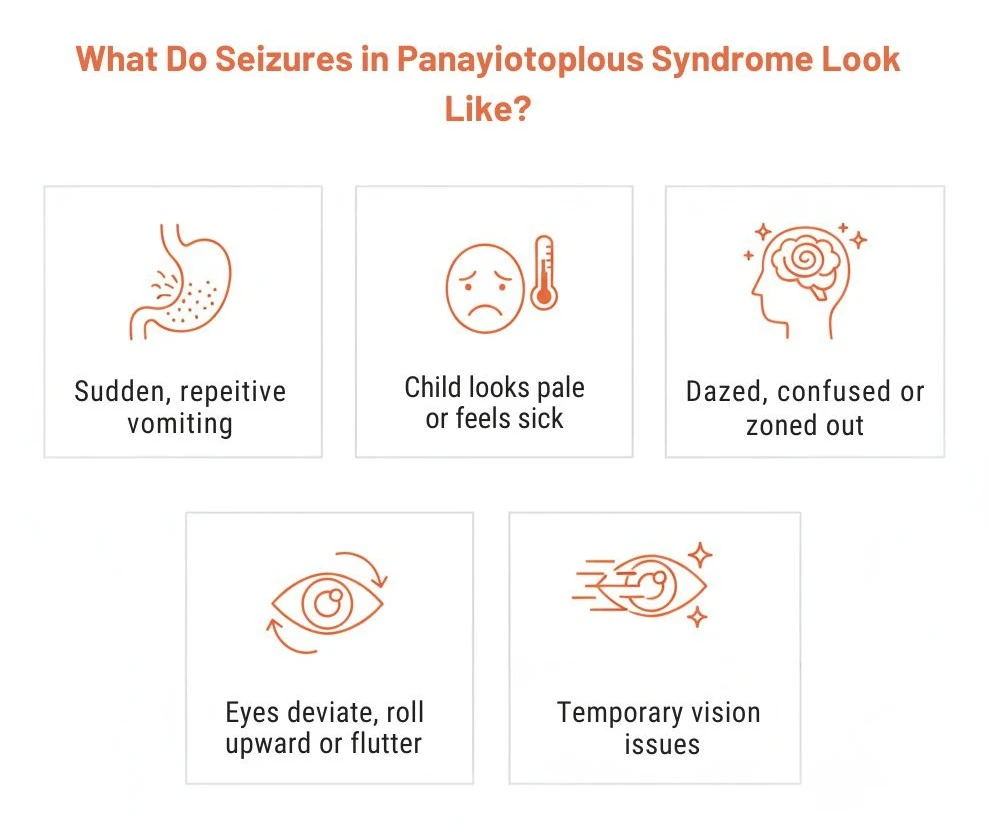
Here’s what seizures in Panayiotopoulos syndrome typically look like:

  • Sudden, repetitive vomiting.
  • The child may look pale or complain of feeling sick.
  • The child may appear dazed or confused or ‘zoned out’.
  • Eyes may deviate to one side or roll upward or flutter.
  • They may not be able to see temporarily, see flashing colours or have blurry vision.

Seizures can occur at any time but are most common during sleep or shortly after falling asleep. They are often prolonged, typically lasting 1 to 30 minutes, though in 21–50% of cases, they may extend up to 2 hours. The longer the seizure, the higher the chance it may progress to generalized tonic-clonic movements.

Because of their unusual presentation, these seizures are frequently mistaken as non-epileptic conditions like fainting, migraines, cyclic vomiting syndrome, motion sickness, sleep disorders, or stomach flu.

When to seek medical help?

While Panayiotopoulos syndrome is usually not life-threatening, it’s essential to consult a pediatric neurologist if your child exhibits any of the symptoms mentioned.

A proper diagnosis often involves:

  • Detailed clinical history
  • EEG testing (electroencephalogram)
  • Possibly an MRI scan to rule out other conditions

An accurate diagnosis can provide peace of mind and prevent unnecessary worry or treatments for unrelated conditions.

What are the different Panayiotopoulos syndrome treatment options?

Panayiotopoulos syndrome is generally considered a benign and self-limiting form of childhood epilepsy. Treatment approaches are tailored based on the frequency, duration, and severity of seizures. 

Here’s a breakdown of the available treatment options:

Observation and supportive care

In many cases, seizures are infrequent and mild, so daily anti-seizure medication may not be necessary. A “watch and wait” approach is commonly adopted, especially when:

  • Seizures occur rarely
  • The child recovers quickly
  • There is minimal impact on daily life

Parental reassurance and guidance play a key role in managing Panayiotopoulos syndrome.

Anti-seizure medications

If seizures are frequent or prolonged, doctors may recommend medication to help control them.

Commonly prescribed anti-seizure medications include oxcarbazepine, carbamazepine, levetiracetam, gabapentin, zonisamide and lacosamide.

The medication choice depends on the child’s medical history and seizure characteristics.

Emergency rescue therapy

Because seizures in Panayiotopoulos syndrome can sometimes last longer than 5 minutes, rescue treatment may be necessary during a seizure emergency. 

Options include:

  • Diazepam rectal gel
  • Intranasal or buccal benzodiazepines (administered in the nose, under the tongue, or between the cheek and gum)

These medications are designed for quick at-home seizure control and should be part of every child’s seizure action plan.

Creating a seizure emergency plan

It’s crucial for parents and caregivers to have a clear plan in place. This should include:

  • When and how to give rescue medication
  • Recognizing signs of seizure emergencies
  • When to call emergency services

Parents should regularly consult with their child’s neurologist to review and update this plan.

Visit Neuropedia for Panayiotopoulos syndrome management in Dubai

At Neuropedia, you’ll find the UAE’s first highly specialized pediatric neuroscience facility, dedicated to delivering world-class care for children with Panayiotopoulos syndrome. 

Their multidisciplinary team of pediatric neurologists and child health experts ensures holistic support—addressing not only seizure control but also your child’s developmental, behavioural, and emotional needs.

For trusted, expert-led care in managing Panayiotopoulos syndrome and other neurological conditions, visit Neuropedia—where children’s brain health comes first.


INSURANCE NETWORKS