


 04 343 1113


Are you having trouble with your child managing their emotions, experiencing intense irritability, and frequent temper outbursts? This may be a sign of Disruptive Mood Dysregulation Disorder (DMDD). Recognizing DMDD symptoms early is crucial for an accurate DMDD diagnosis and timely intervention. DMDD affects emotional regulation in children and adolescents, leading to persistent irritability, frequent temper outbursts, and significant impairment across multiple settings. At Neuropedia, we are dedicated to providing comprehensive, evidence-based mental health resources for parents, caregivers, and educators, helping children with DMDD lead healthier and happier lives.
Understanding DMDD: What Is Disruptive Mood Dysregulation Disorder?
DMDD can be defined as a childhood mental health disorder characterized by severe emotional dysregulation. Children with DMDD experience recurrent temper outbursts, verbal or behavioral, that are out of proportion to the situation. These outbursts occur at least three times per week, accompanied by a persistently irritable or angry mood between episodes.
In DMDD, irritability is not just occasional; it persists and makes it hard for children to get along at home, in school, and with friends. These outbursts and mood issues usually last for at least a year and show up in different places, not just one setting.
Typical vs. Severe Irritability in Children
All children get irritable sometimes, which is a normal response to frustration. In Disruptive Mood Dysregulation Disorder (DMDD), however, irritability is more intense, frequent, and harder to manage. A typical child might feel annoyed when asked to stop playing and do homework, but can usually calm down and comply. A child with DMDD may react with shouting, crying, or even aggression. These severe, frequent outbursts are key DMDD symptoms that are disproportionate to the situation and distinguish the DMDD disorder from normal irritability.
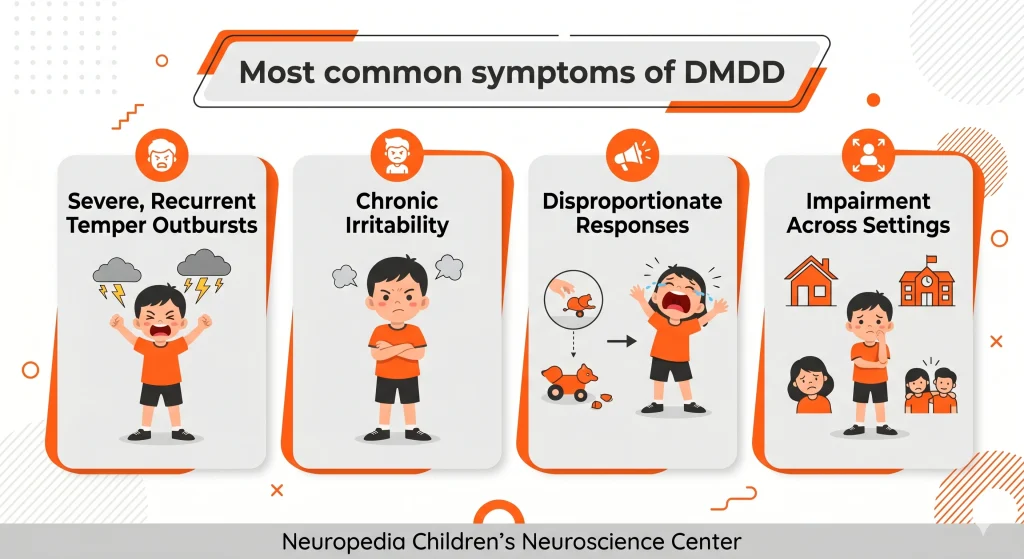
What Are the Most Common Symptoms of DMDD
Neuropedia emphasizes early recognition of DMDD symptoms, which include:
1. Severe, Recurrent Temper Outbursts
Children may display explosive anger through shouting, crying, or physical aggression. These episodes are more intense than typical tantrums and can occur multiple times per week.
2. Chronic Irritability
Even when they are not having outbursts, children with DMDD often stay irritable or angry most of the day. This ongoing mood can make things difficult at home, with friends, and at school.
3. Disproportionate Responses
Small problems can cause big reactions for kids with DMDD, showing that they have a harder time managing their emotions than other children their age.
4. Impairment Across Settings
For a DMDD diagnosis, these behaviors must interfere significantly with daily life and occur in more than one environment, persisting for at least 12 months.
At Neuropedia, we recognize that occasional irritability is a normal part of childhood, but DMDD involves persistent and severe mood disturbances that require professional support.
How a DMDD Diagnosis is Made to Support Your Child
A DMDD diagnosis involves careful assessment by a child psychiatrist, psychologist, or other pediatric mental health specialist. At Neuropedia, the standard diagnostic approach includes:
- Behavioral evaluation: Detailed information is gathered from parents and teachers regarding the child’s temper outbursts, mood patterns, and daily functioning.
- Ruling out other conditions: Since the symptoms can sometimes resemble conditions such as ADHD, oppositional defiant disorder (ODD), anxiety, depression, or pediatric bipolar disorder, clinicians carefully assess these possibilities before confirming a diagnosis.
- Time and Severity Criteria: The symptoms need to happen often (at least three times a week), last for a year or more, and show up in different places.
DMDD is usually not diagnosed in children younger than 6 or older than 18, since age and development are important factors to consider.
When to Seek Professional Help
If your child often seems irritable, has frequent emotional outbursts, or shows other DMDD symptoms that start to affect daily life at home, school, or with friends, it’s a good idea to talk to a healthcare provider. Timely evaluation and guidance regarding DMDD diagnosis and DMDD treatment can make a meaningful difference in helping children manage their emotions and thrive at home, school, and in social settings.
Treatment Options for DMDD
Neuropedia promotes a holistic approach to DMDD treatment, combining psychotherapy, parental support, and, when necessary, medication.
1. Psychotherapy
- Cognitive Behavioral Therapy (CBT): Helps children recognize thought patterns that lead to outbursts and develop strategies for emotional regulation.
- Parent-Training Programs: Teach caregivers how to reinforce positive behavior and manage challenging outbursts effectively.
2. School-Based Support
Children with DMDD often do better with school support, such as structured plans, IEPs, and regular communication between teachers and parents to keep help consistent.
3. Medication
There are no medications specifically approved for DMDD, but doctors may prescribe medications to manage related conditions or to help control severe irritability.
- Stimulants for ADHD symptoms.
- Antidepressants to support mood regulation.
- Atypical antipsychotics for severe aggression (under close supervision).
Neuropedia emphasizes that medication is usually given along with therapy and is carefully monitored to ensure it works and to check for side effects.
Can You Prevent Your Child from DMDD?
While it may not be possible to fully prevent disruptive mood dysregulation disorder DMDD, early recognition of DMDD symptoms can reduce distress for both children and families. Acting quickly can also prevent complications, including worsening emotional and behavioral problems.
Tips for Caregivers of Children with DMDD
Caring for a child with Disruptive Mood Dysregulation Disorder (DMDD) can be challenging, but understanding the disorder and building a supportive environment can make a big difference.
- Learn about DMDD: Understand what is DMDD, its DMDD symptoms, DMDD meaning, and the DMDD disorder. Discuss DMDD diagnosis and DMDD treatment options with your child’s healthcare provider and explore trusted resources.
- Work with school staff: Team up with teachers, counselors, or school psychologists to come up with plans and supports that help your child succeed.
- Manage your stress: Take care of yourself so you can stay strong and support your child better.
- Communicate with providers: Share observations, track DMDD symptoms, and ask questions about DMDD treatment to ensure your child receives appropriate care.
With knowledge, collaboration, and support, families can help children with DMDD in children navigate challenges and improve their emotional well-being.
Why Choose Neuropedia
Neuropedia recognizes that DMDD in children is a complex but manageable condition. By understanding what is DMDD, identifying DMDD symptoms, pursuing an accurate DMDD diagnosis, following evidence-based DMDD treatment strategies, and receiving the right professional care, family involvement, as well as support from schools, children with DMDD can make significant progress in managing their emotions and daily functioning, allowing them to thrive despite the challenges of the disorder.
At Neuropedia, we work to raise awareness, support families, and offer resources so children with mental health conditions like DMDD can live healthier, more balanced lives.




.png)